Key Drivers of Growth
- Sustainability and Resource Efficiency
With increasing awareness of environmental challenges and the urgent need for sustainable farming practices, precision agriculture offers a compelling solution. It helps reduce the overuse of inputs, limits greenhouse gas emissions, and promotes soil health, which is critical for long-term agricultural sustainability.
- Rising Food Demand
The global population is expected to surpass 9 billion by 2050. Meeting this demand will require more innovative use of arable land. Precision farming empowers farmers to increase yields without expanding farmland, striking a balance between productivity and conservation.
- Government Support and Policies
Governments in both developed and emerging economies are implementing policies, offering subsidies, and launching awareness programs to promote the adoption of innovative farming solutions. These initiatives are helping reduce the financial burden of implementation for farmers.
- Technological Advancements
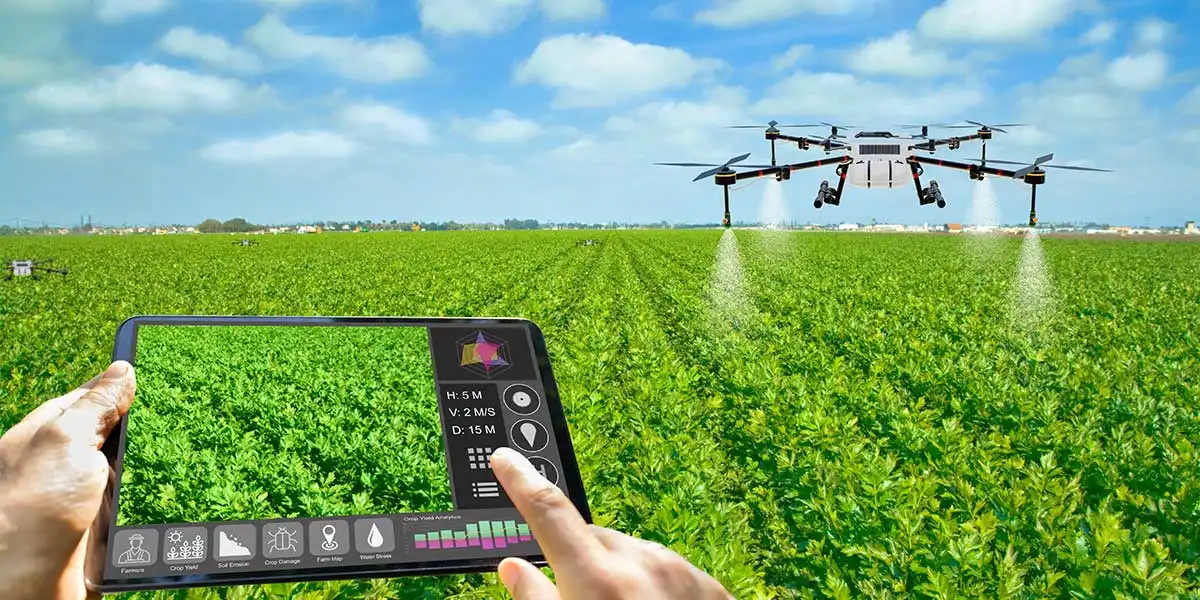
From cloud computing to AI and edge devices, innovations across the tech spectrum are making precision farming more accessible and scalable. The growing integration of IoT devices in farming equipment has opened new possibilities for real-time decision-making and automation.
Regional Outlook
North America currently leads the precision farming market, driven by early adoption, strong infrastructure, and supportive policies. However, the Asia-Pacific region is projected to experience the fastest growth during the forecast period. Countries such as India, China, and Australia are actively investing in innovative agricultural initiatives to address food security, climate adaptation, and rural development.
Europe, with its strong emphasis on sustainability and compliance with green regulations, is also expected to experience significant growth, particularly in countries such as Germany, the Netherlands, and France.
Future Outlook
As the market continues to evolve, integration between various agricultural technologies will define the next phase of precision farming. Interoperability between machinery, sensors, and software platforms will allow farmers to access a seamless ecosystem of data and tools.
Moreover, affordability is improving. As the cost of sensors and connectivity drops, small and medium-sized farms, especially in developing countries, will be able to join the precision agriculture revolution.
Conclusion
The future of farming lies in precision, not guesswork. As technology becomes increasingly integrated into agriculture, precision farming is transforming the global food system, making it more efficient, sustainable, and resilient. With a projected market size of $21.2 billion by 2030, this sector holds enormous potential for agritech innovators, policy-makers, and growers alike.
Whether it’s improving soil health, maximizing crop output, or reducing water use, precision farming is helping us plant the seeds of a brighter tomorrow.
Learn More and Take Action:
Consider becoming a member of the BCC Research Library and gain access to our full catalog of market research reports in your industry. Not seeing what you are looking for? We offer custom solutions too, including our new product line: Custom Intelligence Services.
Contact us today to find out more.