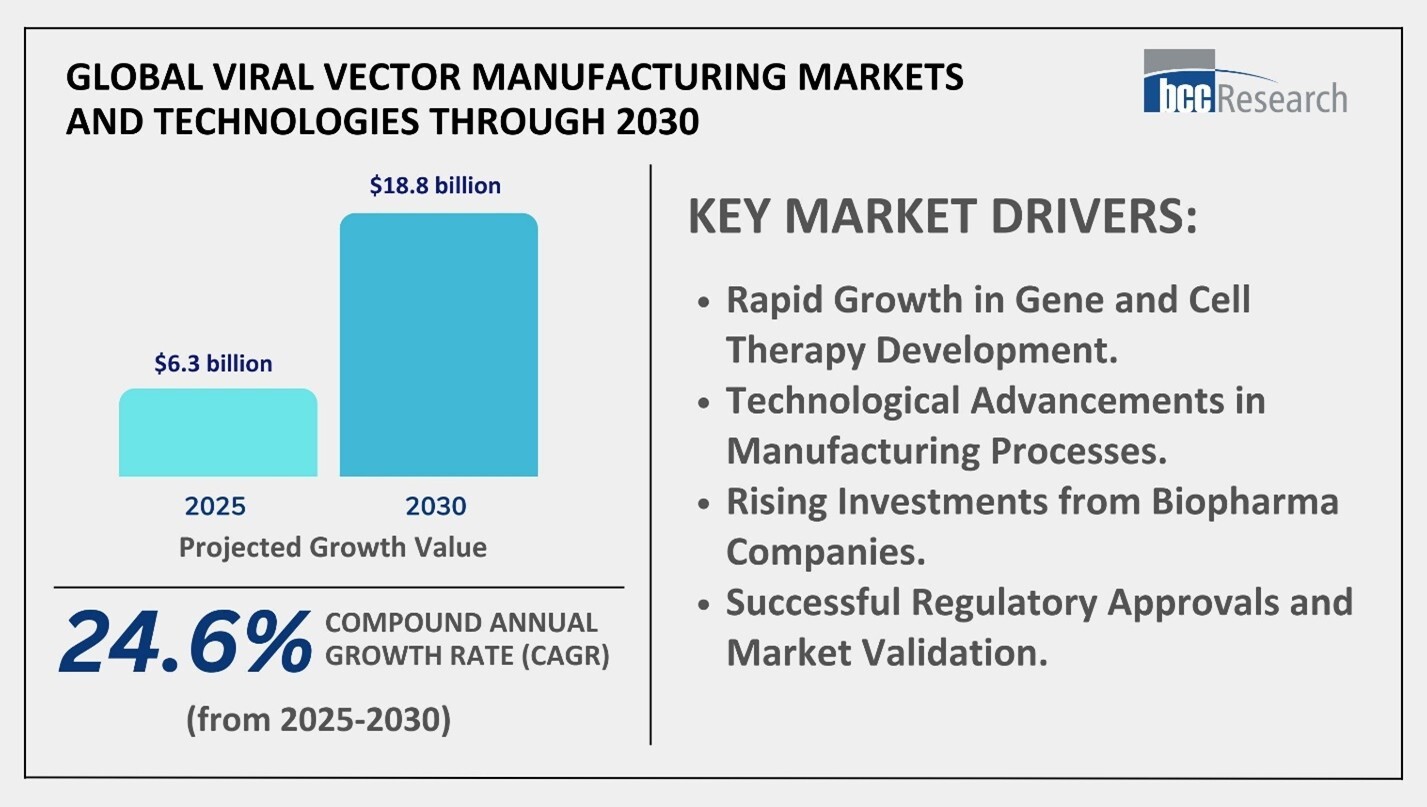
Key Factors Driving Market Growth
- The Rise of Gene and Cell Therapy
The number of approved gene and cell therapy products is increasing annually, and many more are in clinical development. Each of these therapies relies on viral vectors for production and delivery, driving a significant demand for scalable manufacturing capabilities.
- Advances in Manufacturing Technologies
Continuous innovations - such as single-use bioreactors, automation, and enhanced purification systems - are transforming the production of viral vectors. These technologies reduce production time, improve consistency, and lower overall costs, making advanced therapies more accessible.
- Expansion of Biopharmaceutical R&D
Pharmaceutical and biotech companies are increasing investments in research and development of advanced therapies. Many have partnered with specialized manufacturing organizations to expand production capacity and ensure the availability of high-quality viral vectors for clinical and commercial use.
- Success of Gene Therapy Approvals
Recent approvals of gene therapies for rare diseases have validated the commercial potential of viral vector-based products. This success inspires greater investor confidence and prompts regulatory agencies to streamline guidelines, supporting faster development and market entry.
- Rising Demand for Viral Vector-Based Vaccines
The success of viral vector platforms in vaccine development, particularly in recent years, has reinforced their importance. This experience has accelerated innovation and adoption in other areas of healthcare, including preventive and therapeutic applications.
Market Segmentation and Regional Insights
The viral vector manufacturing market is segmented based on vector type, application, end user, and geography.
- Vector Type: Adeno-associated virus (AAV) leads the market due to its safety and firm performance in gene therapies. Lentiviral and retroviral vectors are also gaining traction for use in immuno-oncology and regenerative medicine.
- Application: Gene therapy remains the dominant segment, followed by cell therapy and vaccines. These applications are driving both academic and commercial manufacturing growth.
- End Users: Pharmaceutical and biotech companies represent the largest end-user group, while academic and research institutions contribute significantly to innovation and clinical development.
- Regional Outlook: North America leads the global market, supported by advanced infrastructure, substantial investment, and regulatory clarity. Europe is closely following, driven by robust research and development (R&D) activities. Meanwhile, the Asia-Pacific region is expected to experience the fastest growth, driven by the expansion of biotech capabilities and supportive government policies.
Challenges Facing the Industry
Despite the strong momentum, the viral vector manufacturing industry faces several challenges:
- High Production Costs: Viral vector production is complex and resource-intensive, requiring advanced facilities and skilled professionals.
- Capacity Limitations: The rapid growth in demand often outpaces available manufacturing capacity, leading to supply shortages.
- Regulatory Complexity: Evolving global regulatory standards for gene therapy and viral vector production create challenges for manufacturers operating across multiple regions.
- Quality and Scalability Issues: Maintaining product consistency and meeting Good Manufacturing Practice (GMP) standards during large-scale production remains a technical hurdle.
Future Outlook
The next decade promises significant progress in viral vector manufacturing technologies. Automation, artificial intelligence, and digital monitoring systems will enhance production by making it more precise, reliable, and cost-efficient. Novel techniques, such as cell-free vector manufacturing and synthetic biology, are expected to revolutionize the development and scaling of vectors.
Moreover, global collaboration between research institutions, biotechnology firms, and governments will help address infrastructure gaps and ensure broader access to advanced therapies. As the number of approved gene therapies increases, the industry will transition from limited-scale production to complete commercial manufacturing, driving further cost reductions and innovation.
By 2030, viral vector manufacturing will be one of the most critical pillars of modern medicine, powering the next generation of cures for previously untreatable diseases.
Final Thoughts
Viral vector manufacturing stands at the core of the gene and cell therapy revolution. With rapid technological advancements, increasing therapy approvals, and expanding global investment, the market is poised for sustained, high-growth momentum. As manufacturers overcome scalability and regulatory challenges, viral vectors will continue to enable life-changing, next-generation therapies worldwide.
Learn More and Take Action:
Consider becoming a member of the BCC Research Library and gain access to our full catalog of market research reports in your industry. Not seeing what you are looking for? We offer custom solutions too, including our new product line: Custom Intelligence Services.
Contact us today to find out more.