
New Hope in Brain Tumor Care: How Innovation Is Transforming Treatment

New Hope in Brain Tumor Care: How Innovation Is Transforming Treatment

date

Jan 22, 2026

Blog pharmaceuticals New Hope in Brain Tumor Care: How Innovation Is Transforming Treatment

The treatment of brain tumors remains one of the most complex challenges in modern healthcare. These tumors, whether benign or malignant, can severely affect brain function and overall quality of life. Yet, recent breakthroughs in diagnostics, drug development, and precision medicine are changing how doctors and researchers approach this complex disease. The progress being made is not only scientific but also deeply human, bringing new hope to patients and families around the world.

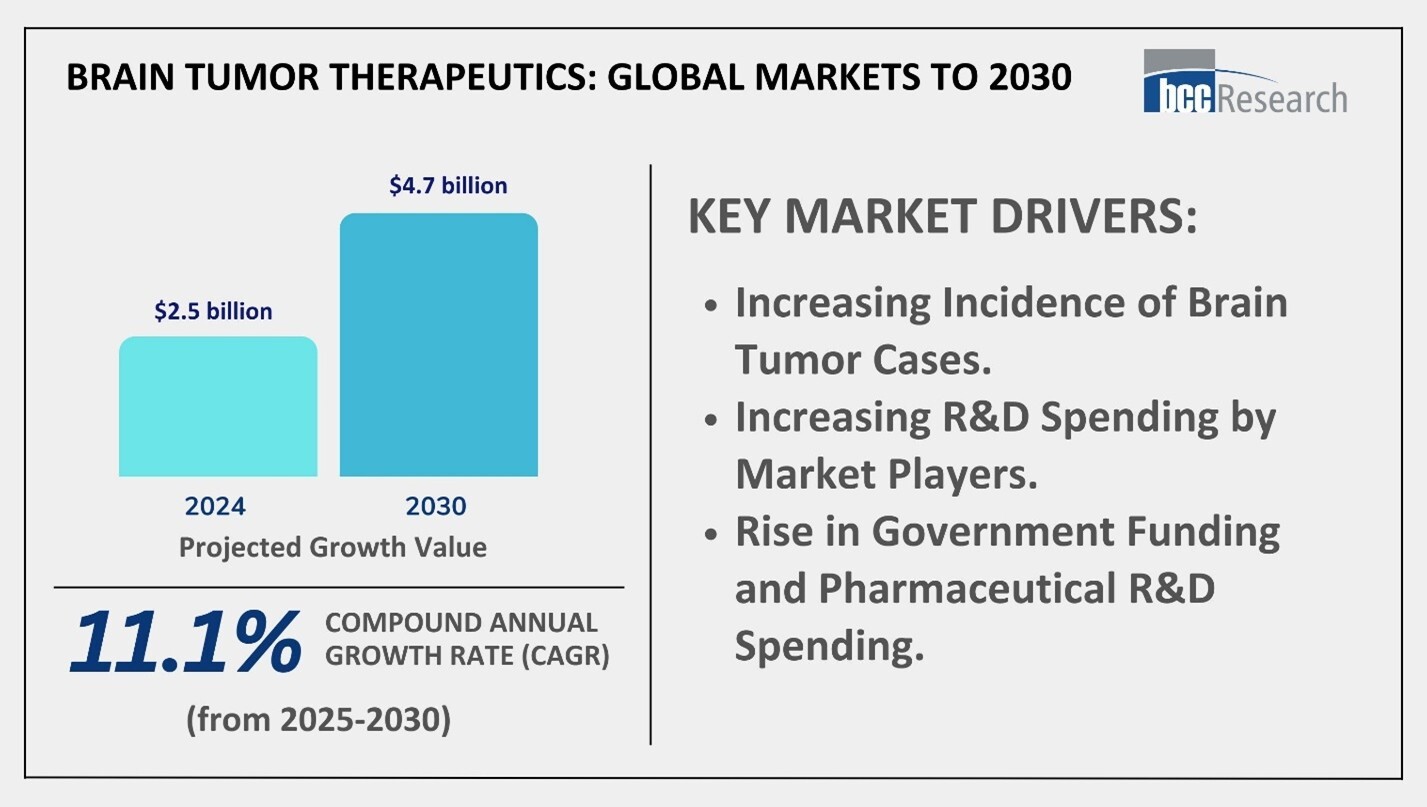
According to BCC Research, the global market for brain tumor therapeutics is expected to continue expanding rapidly, driven by technological advancements and increasing research investment. With ongoing efforts to develop more targeted and effective treatments, the next decade is expected to reshape how brain tumors are diagnosed and managed globally.
Picture1-Jan-23-2026-03-57-36-4753-AM

Understanding the Challenge

Brain tumors develop when abnormal cells grow uncontrollably within the brain or central nervous system. They can originate within the brain itself (primary tumors) or spread from other parts of the body (secondary tumors). Because of the brain’s delicate structure, even small tumors can lead to serious complications, making timely diagnosis and treatment essential.

Traditional treatments, such as surgery, radiation therapy, and chemotherapy, remain critical, but each has limitations. Surgery may not always be possible due to the tumor’s location, and conventional chemotherapy often struggles to cross the blood-brain barrier, which protects the brain from foreign substances. This has led to the development of more advanced approaches, such as targeted therapies, immunotherapies, and gene-based treatments, designed to improve precision and minimize harm to healthy tissue.

Key Market Drivers

  1. Early Detection and Technological Progress

Modern imaging tools, such as MRI, CT scans, and molecular diagnostics, are enhancing the accuracy of early detection. Earlier diagnosis means patients can receive treatment when it is most effective, increasing the likelihood of positive outcomes.

  1. Growth of Targeted and Immunotherapies

Targeted therapies have become a cornerstone in brain tumor treatment. These therapies target specific molecular pathways that drive tumor growth, enabling more precise and less toxic interventions. Similarly, immunotherapies are helping the body’s immune system recognize and destroy tumor cells, offering a more personalized and sustainable treatment option.

  1. Advances in Drug Delivery Systems

One of the most significant challenges in treating brain tumors is getting drugs across the blood-brain barrier. Innovative methods, such as nanoparticle-based delivery, focused ultrasound, and direct drug infusion, are showing promise in improving the delivery of medicine directly to tumor sites.

  1. Rising Research Collaboration

Pharmaceutical companies, research institutes, and healthcare organizations are forming strong partnerships to accelerate the discovery of new drugs. Collaborative research has led to the development of novel molecules, biologics, and combination therapies, expanding treatment possibilities for patients worldwide.

  1. Growing Awareness and Investment

Public awareness and government funding for cancer research are increasing globally. As a result, more clinical trials are being conducted, leading to faster innovation and broader access to cutting-edge treatments.


Brain Tumor Therapeutics: Global Markets to 2030

The report provides an analysis of brain tumor therapeutics and analyzes market trends. Using 2024 as the base year, the report provides estimated market data for 2025 through 2030. The market in this report is segmented by therapy type, patient age, end user, and region. The report covers regulatory scenarios, drivers, restraints, opportunities, and the market share for key companies.

Market Segmentation

The brain tumor therapeutics market can be viewed through several key lenses:

  • By Tumor Type: Glioblastoma multiforme (GBM) remains the most aggressive and common type of brain tumor, representing a significant focus for drug development. Other types, such as meningiomas and astrocytomas, are also being studied for new treatment options.
  • By Therapy Type: Chemotherapy, targeted therapy, and immunotherapy dominate the current landscape. Targeted and immune-based treatments are growing at the fastest rate due to their higher efficacy and improved safety profiles.
  • By Region: North America leads in research and treatment adoption due to strong healthcare infrastructure and high R&D spending. Europe follows closely, while the Asia-Pacific region is showing remarkable growth, driven by rising healthcare investment and access to advanced therapies.

Challenges and Opportunities

While the market outlook is positive, several obstacles remain. The high cost of drug development, the complexity of clinical trials, and limited access to advanced care in specific regions continue to slow progress. Additionally, brain tumor biology is highly variable, which makes developing universally effective treatments difficult.

However, these challenges are also driving innovation. The adoption of artificial intelligence in diagnostics, machine learning for predictive modeling, and genomic profiling for personalized medicine is reshaping the research landscape. The increasing use of biomarkers to predict therapy response is another significant step toward individualized care.

The Road Ahead

The next few years will be transformative for brain tumor therapeutics. Researchers are focusing on combination therapies that integrate multiple treatment methods, for example, pairing immunotherapy with targeted drugs or radiation to enhance effectiveness. New approaches such as gene editing and cell-based therapies are also showing early promise in clinical trials.

As technology evolves, the focus is shifting from merely extending survival to enhancing the quality of life. Greater collaboration between researchers, clinicians, and technology developers will continue to advance the field, making treatments more efficient, accessible, and patient-centered.

Conclusion

The future of brain tumor therapeutics is one of cautious optimism. Breakthroughs in medical science, combined with a deeper understanding of tumor genetics and biology, are unlocking new treatment possibilities. What once seemed impossible, effectively targeting tumors deep within the brain, is now becoming achievable through innovation and collaboration.

While challenges remain, the ongoing progress in research and therapy development offers renewed hope for patients and their families. The coming decade will not only expand the boundaries of neuroscience and oncology but also redefine how we approach one of the most complex diseases in human health.

Learn More and Take Action:

Consider becoming a member of the BCC Research Library and gain access to our full catalog of market research reports in your industry. Not seeing what you are looking for? We offer custom solutions too, including our new product line: Custom Intelligence Services.

Contact us today to find out more.

    Stay ahead of industry trends, build your market research strategy and more.

    Sandeep Singh Negi

    Written By Sandeep Singh Negi

    Sandeep is a Senior Executive in Marketing Operations at BCC Research, proficiently serving as a graphic designer and content creative specialist. His expertise extends to AutoCAD and Revit, and he has made valuable contributions to the event industry with his design skills.

    Guiding smart decisions every step of the way

    Guiding smart decisions every step of the way

    We are your trusted research partner, providing actionable insights and custom consulting across life sciences, advanced materials, and technology. Allow BCC Research to nurture your smartest business decisions today, tomorrow, and beyond.

    Contact Us