

The Rise of Immunotherapy: Market Dynamics, Innovation, and Global Impact

The Rise of Immunotherapy: Market Dynamics, Innovation, and Global Impact

date

Dec 2, 2025

Blog pharmaceuticals The Rise of Immunotherapy: Market Dynamics, Innovation, and Global Impact

Over the past decade, immunotherapy has reshaped the landscape of modern medicine, emerging as one of the most powerful strategies for treating cancer, autoimmune disorders, and chronic inflammatory diseases. With rising clinical success rates and continuous expansion of therapeutic indications, the global market for immunotherapy drugs has accelerated rapidly. This article provides a comprehensive overview of what immunotherapy drugs are, how they work, and the trends driving their global market growth.

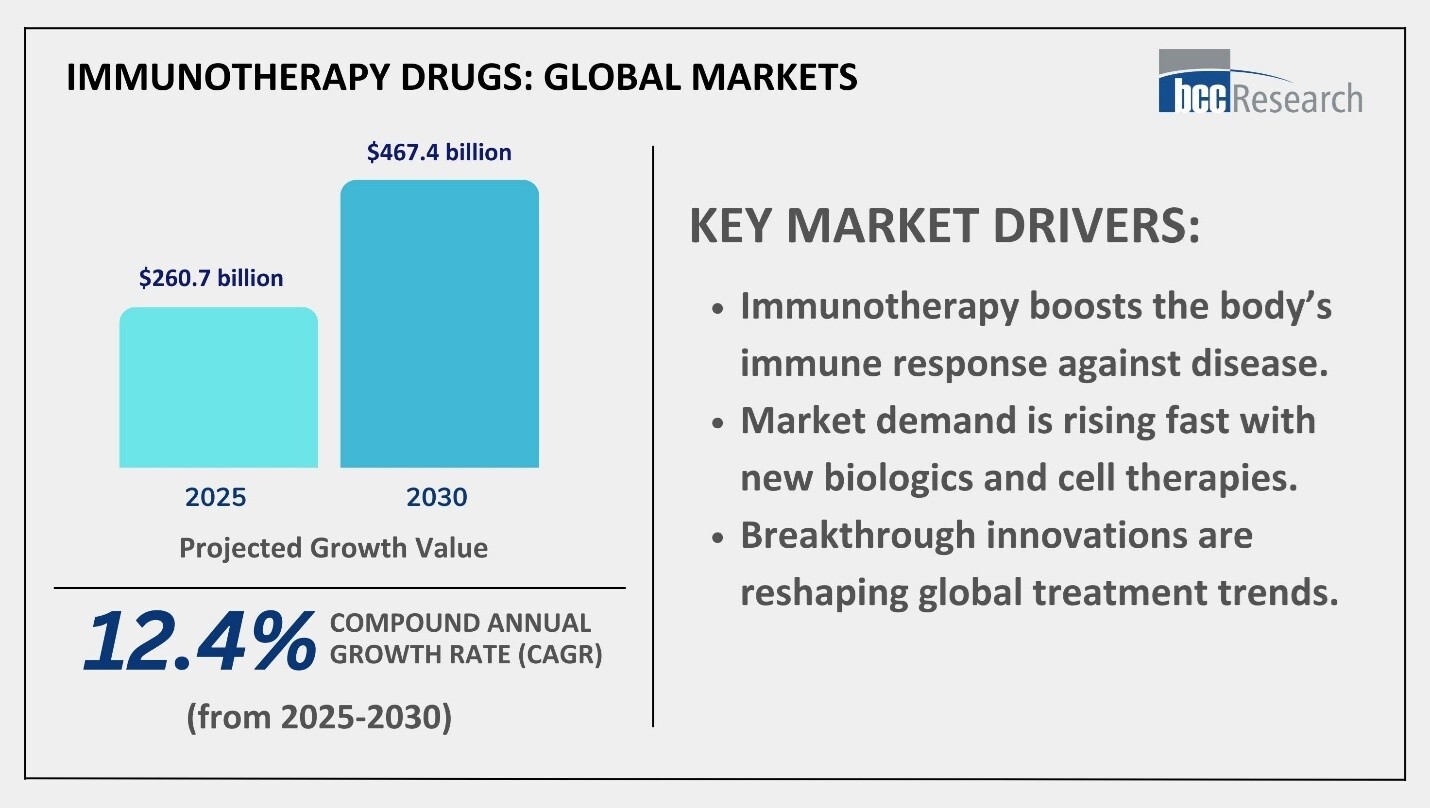
The Immunotherapy Drugs: Global Markets is estimated to grow from $260.7 billion in 2025 and is projected to reach $467.4 billion by the end of 2030, at a compound annual growth rate (CAGR) of 12.4% during the forecast period of 2025 to 2030.
Picture1-Dec-02-2025-12-38-47-7437-PM

What Are Immunotherapy Drugs?

Immunotherapy drugs are therapeutic agents designed to modulate, activate, or suppress the body’s immune system to fight diseases. Instead of directly targeting pathogens or tumor cells, these drugs empower the immune system to recognize abnormalities, eliminate harmful cells, or restore immune balance.

Broadly, immunotherapy drugs fall into the following categories:

  • Checkpoint Inhibitors (e.g., PD-1, PD-L1, CTLA-4 inhibitors)
  • Monoclonal Antibodies (mAbs)
  • Cancer Vaccines
  • Cytokine Therapies
  • Adoptive Cell Therapies (e.g., CAR-T cells)
  • Immunomodulators that regulate immune responses in autoimmune diseases

These therapies offer targeted, long-term, and often more durable responses compared to traditional chemotherapy or biological drugs.

Therapeutic Mechanisms

Immunotherapy drugs influence immune responses through several core mechanisms:

  • Activation of T-cells to overcome tumor-induced immune suppression.
  • Direct targeting of tumor antigens through antibody–antigen interactions.
  • Enhanced immune surveillance, enabling early detection and elimination of aberrant cells.
  • Regulation of inflammatory pathways, particularly in autoimmune diseases.
  • Genetic reprogramming of immune cells, enabling targeted cytotoxicity with minimal impact on healthy tissue.

These mechanisms provide long-lasting and durable responses, particularly in oncology, where immunotherapies have demonstrated survival benefits unmatched by traditional modalities in several cancer types.

Global Market Dynamics

The global market for immunotherapy drugs is expanding at a strong pace, driven by rising disease prevalence, clinical innovation, regulatory approvals, and broader adoption in oncology and chronic disease management. Key forces include:

  1. Rapid Growth in Cancer Incidence

As cancer remains a leading cause of death globally, demand for effective, durable therapies continues to rise. Immunotherapy has become a core component of standard cancer treatment protocols in major markets.

  1. Expansion of Indications

Checkpoint inhibitors, originally approved for melanoma and lung cancer, now have expanded usage across multiple solid tumors and hematological malignancies. This multiplies their market potential.

  1. Strong Clinical Pipeline

Pharmaceutical companies globally are investing heavily in immuno-oncology research. Hundreds of clinical trials are underway, exploring combination therapies and novel immune targets.

  1. Increasing Adoption in Autoimmune and Inflammatory Diseases

Beyond oncology, immunotherapies are gaining traction in treating chronic immune-driven disorders, creating additional market segments.


  1. Geographic Market Trends
  • North America remains the largest market due to advanced healthcare systems, high treatment adoption, and strong R&D investment.
  • Europe shows steady growth supported by government funding, rising cancer cases, and expanding clinical research.
  • Asia-Pacific is the fastest-growing region, driven by large patient populations, healthcare modernization, and increasing regulatory approvals.

Immunotherapy Drugs: Global Markets

The global immunotherapy drugs market is expected to grow from $260.7 billion in 2025 and is projected to reach $467.4 billion by the end of 2030, at a compound annual growth rate (CAGR) of 12.4% during the forecast period of 2025 to 2030.

Technological and Scientific Drivers

Several advancements are accelerating market growth:

  • Precision medicine and biomarker-driven therapy selection
  • Combination immunotherapies improving treatment outcomes
  • Next-generation cell therapies including TCR-T and NK cell platforms
  • AI and machine learning for immune response prediction
  • mRNA vaccine technologies, expanding beyond infectious disease applications

These innovations promise new treatment possibilities and deeper market penetration.

Challenges Affecting the Market

Despite strong growth, the immunotherapy market faces several challenges:

  • High cost of treatment, limiting accessibility in some regions
  • Immune-related toxicities requiring specialized management
  • Complex manufacturing for cell and gene therapies
  • Regulatory hurdles in approving advanced biologics
  • Variable patient response rates, necessitating biomarkers and personalized approaches

Addressing these challenges is essential for sustainable market expansion.

Future Outlook

The future of immunotherapy drugs is marked by continuous innovation. Key trends likely to define the next decade include:

  • Development of multi-target agents and adaptable immune modulators
  • Widespread availability of off-the-shelf allogeneic cell therapies
  • Integration of AI-guided treatment decisions
  • Expansion into early-stage cancers and adjuvant therapy settings
  • Growth in biosimilars for monoclonal antibodies, improving affordability

With the global healthcare system moving toward precision and personalized medicine, immunotherapy is poised to become one of the most dominant therapeutic pillars worldwide.

Conclusion

Immunotherapy drugs represent a major shift in modern therapeutics. Their ability to activate or modulate the immune system has redefined treatment standards across oncology and immune-mediated diseases. Supported by scientific innovation, clinical success, and expanding treatment adoption, the global market continues to experience robust growth. As next-generation immune technologies mature, immunotherapy is set to remain at the forefront of global pharmaceutical development.

Learn More and Take Action: 

Consider becoming a member of the BCC Research library and gain access to our full catalog of market research reports in your industry. Not seeing what you are looking for? We offer custom solutions too, including our new product line: Custom Intelligence Services.

Contact us today to find out more.

    Stay ahead of industry trends, build your market research strategy and more.

    Divya Dhamija

    Written By Divya Dhamija

    Divya Dhamija is a Senior Executive of Marketing Operations at BCC Research, with a master’s degree in business. She specializes in optimizing marketing strategies and content creation and is dedicated to driving organizational growth through strategic marketing initiatives.

    Guiding smart decisions every step of the way

    Guiding smart decisions every step of the way

    We are your trusted research partner, providing actionable insights and custom consulting across life sciences, advanced materials, and technology. Allow BCC Research to nurture your smartest business decisions today, tomorrow, and beyond.

    Contact Us