

Where Semiconductor Chips Matter Most

Where Semiconductor Chips Matter Most

date

Dec 8, 2025

Blog Semiconductor Where Semiconductor Chips Matter Most

Semiconductor chips, often referred to as the “brains” behind modern electronics, are at the heart of today’s digital revolution. These tiny but powerful components are used in everything from smartphones and computers to cars, medical equipment, industrial machinery, and home appliances. As our reliance on smart, connected technologies grows, so does the importance of these chips.
Picture1-Dec-08-2025-12-06-36-5172-PM

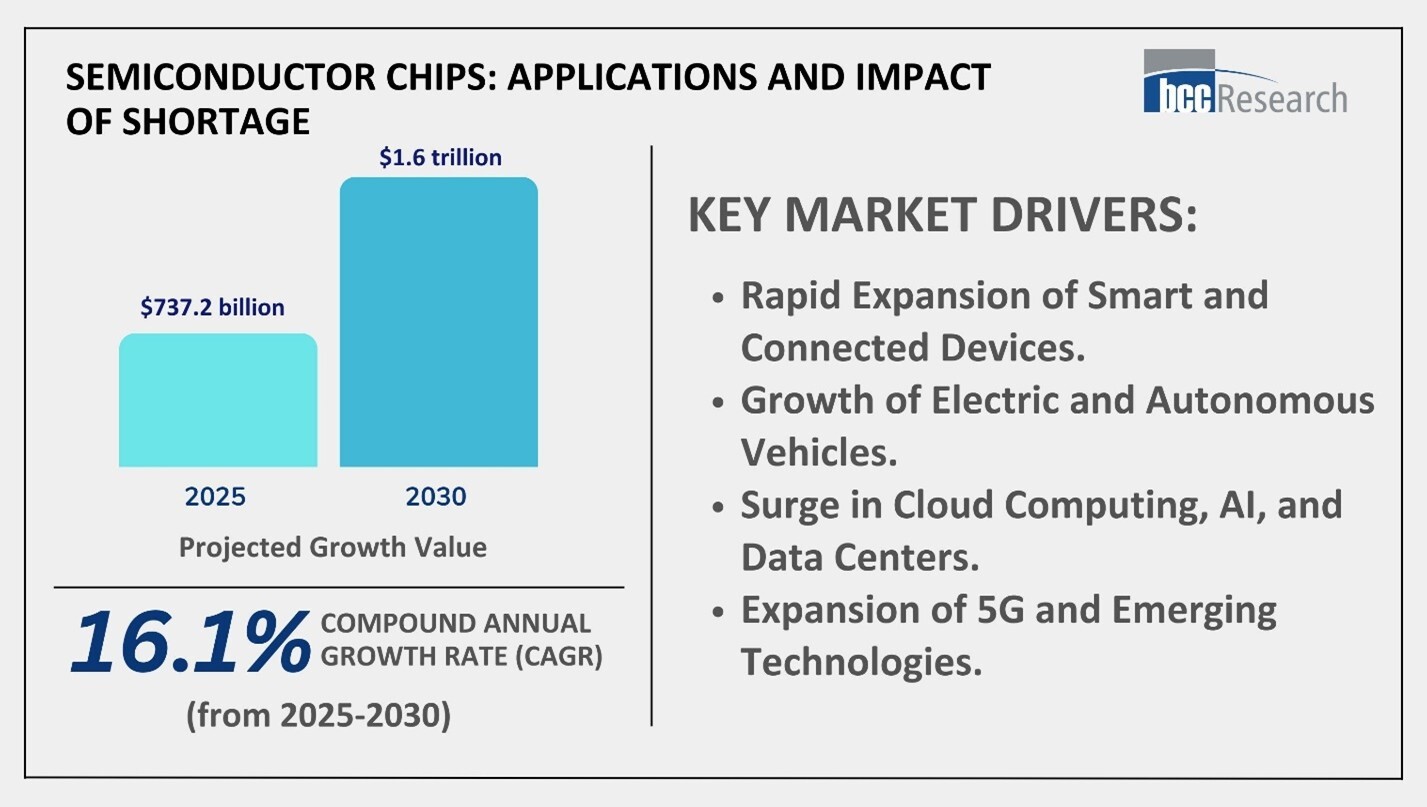
According to BCC Research, the global market for semiconductor chips is expected to grow from $737.2 billion in 2025 to $1.6 trillion by the end of 2030, at a compound annual growth rate (CAGR) of 16.1% during the forecast period from 2025 to 2030.

Where Chips Matter Most

Semiconductors power a wide range of applications across industries. In consumer electronics, they drive the processing, storage, and communication functions of devices we use daily—phones, tablets, laptops, and TVs. In the automotive sector, chips are essential for vehicle functions such as engine control, safety features, infotainment systems, and advanced driver-assistance systems (ADAS). As electric vehicles and autonomous driving gain momentum, demand for chips continues to soar.

In healthcare, chips are used in diagnostic devices, wearable health monitors, and robotic surgical tools. In industrial settings, they support automation, predictive maintenance, and data analytics. Even agriculture, logistics, and defense systems depend heavily on semiconductor technology.

The Global Shortage: What Happened?

Over the past few years, the world has witnessed a significant semiconductor chip shortage that has affected nearly every sector. The reasons were multifaceted. The COVID-19 pandemic disrupted manufacturing facilities and supply chains while simultaneously increasing demand for electronics due to remote work, online learning, and digital entertainment.

Automakers, expecting reduced demand during the pandemic, initially scaled back orders. However, when demand surged back faster than expected, chip supply had already been redirected to consumer electronics, creating a severe imbalance. Furthermore, natural disasters, labor shortages, geopolitical tensions, and the limited number of advanced chip manufacturers all contributed to exacerbating the crisis. 

Industries Left Scrambling

The shortage had a domino effect across industries. Automakers had to halt production lines and delay the launches of new models due to a shortage of chip components. Electronics manufacturers faced delays and increased costs. Even the production of everyday household items, such as washing machines and refrigerators, slowed down.

This bottleneck emphasized the importance of chips not just as components, but as strategic assets. Businesses that once viewed semiconductors as readily available commodities were compelled to reassess their procurement and inventory strategies.


Semiconductor Chips: Applications and Impact of Shortage

The global market for semiconductor chips is expected to grow from $737.2 billion in 2025 and is projected to reach $1.6 trillion by the end of 2030, at a compound annual growth rate (CAGR) of 16.1% during the forecast period of 2025 to 2030.

Long-Term Impact and Strategic Shifts

The chip shortage acted as a wake-up call. Companies began investing more in securing their supply chains, creating buffer inventories, and forming long-term partnerships with chipmakers. Many businesses also started to consider localizing or diversifying their supply sources to reduce reliance on a few global manufacturers.

Governments, too, recognized the national and economic security risks posed by chip shortages. Massive funding initiatives were announced to boost domestic chip manufacturing capabilities, support research, and train a new generation of semiconductor engineers.

Innovation Amid Challenges

Despite the challenges, the semiconductor industry continued to innovate. There is now a stronger push toward advanced chip nodes, energy-efficient architectures, and integrating artificial intelligence into chip design. The rise of edge computing, 5G networks, and Internet of Things (IoT) devices is also shaping future demand and design of chips.

As new use cases emerge in areas such as AI, quantum computing, and green energy technologies, semiconductor chips will become increasingly central to global progress. The shortage may eventually subside, but the lessons it teaches are likely to redefine how industries approach planning, innovation, and risk management in the years to come.

Conclusion

Semiconductor chips may be small in size, but their impact is monumental. They power the technologies that define our modern lives and economies. The global shortage has shown us how deeply interconnected and vulnerable our digital ecosystem is. Moving forward, strategic investment, resilient supply chains, and continuous innovation will be crucial to meet the growing demand and ensure that industries can thrive in an increasingly digital world.

Learn More and Take Action:

Consider becoming a member of the BCC Research Library and gain access to our full catalog of market research reports in your industry. Not seeing what you are looking for? We offer custom solutions too, including our new product line: Custom Intelligence Services.

Contact us today to find out more.

    Stay ahead of industry trends, build your market research strategy and more.

    Sandeep Singh Negi

    Written By Sandeep Singh Negi

    Sandeep is a Senior Executive in Marketing Operations at BCC Research, proficiently serving as a graphic designer and content creative specialist. His expertise extends to AutoCAD and Revit, and he has made valuable contributions to the event industry with his design skills.

    Guiding smart decisions every step of the way

    Guiding smart decisions every step of the way

    We are your trusted research partner, providing actionable insights and custom consulting across life sciences, advanced materials, and technology. Allow BCC Research to nurture your smartest business decisions today, tomorrow, and beyond.

    Contact Us