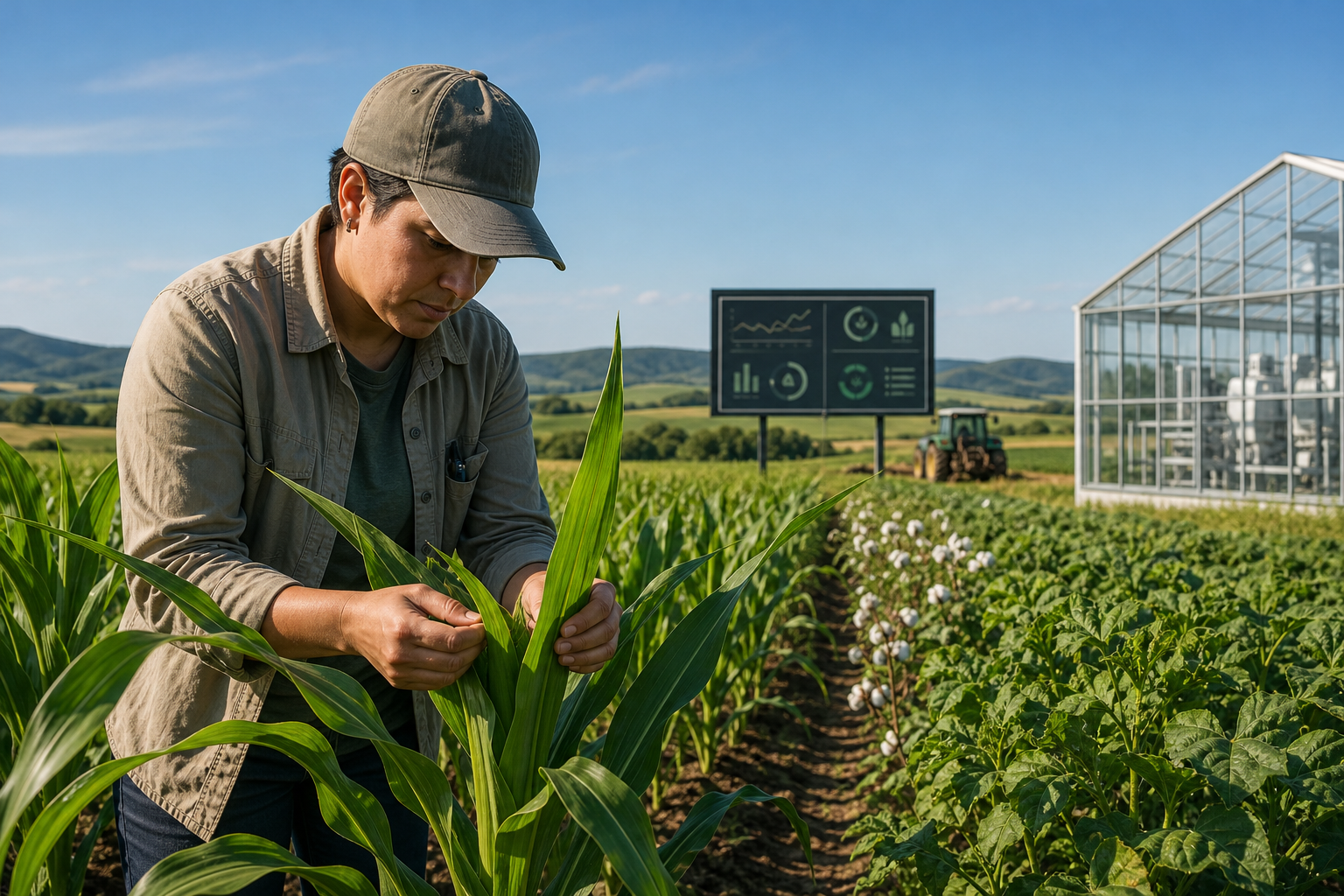
Agricultural biotechnology sits at the intersection of food security, climate adaptation, and scientific innovation. Pressure on global food systems is intensifying: the world population is projected to reach approximately 9.7 billion by 2050, arable land is shrinking through degradation, and climate variability is reducing yield predictability across key growing regions. Biotechnology — from genetically modified seeds and microbial inputs to advanced genomics and gene editing — is increasingly the practical answer to these structural challenges, moving from niche research programs into mainstream commercial agriculture.
The global agricultural biotechnology market was valued at $84.7 billion in 2025 and is forecast to reach $137.0 billion by 2031, growing at a CAGR of 8.4% over the 2026–2031 period. That growth reflects genuine demand across product categories and geographies, not just incremental expansion. Investment from both public institutions and private corporations continues to strengthen innovation pipelines, while supportive regulatory shifts in China, India, Ghana, and the EU are opening new markets for next-generation products.
The companies driving this expansion range from global crop science conglomerates to focused specialists in biologicals, genomics tools, and regional seed development. The 10 companies profiled below represent the breadth of the market — each occupying a distinct position in the agricultural biotechnology value chain and each pursuing strategies that reflect where the industry is heading next.
Market Context: Segments and Regional Leadership
By product, biotech seeds remain the largest segment at $46.8 billion in 2025, growing at a 7.9% CAGR. Demand is anchored by genetically modified corn, soybean, and cotton varieties engineered with stacked traits — insect resistance, herbicide tolerance, and drought tolerance — which have become standard in large-scale row crop farming across North America and South America. The plants end-use segment mirrors this dominance at $58.6 billion, growing at 8.0% CAGR, reflecting the continued centrality of crop biotechnology. The fastest-growing product segment is biotechnology tools at a 10.4% CAGR, driven by expanding research activity in gene editing, next-generation sequencing, and precision breeding — the infrastructure layer that underpins all other product development. Biologicals, at $20.2 billion and a 9.3% CAGR, are growing rapidly as demand shifts toward sustainable inputs and integrated pest management.
North America is the largest regional market at 42.2% of the global total, underpinned by the United States where over 90% of key crop acreage uses genetically engineered varieties. The region benefits from established R&D infrastructure, high farmer acceptance, and deep adoption of biological crop protection solutions. Asia-Pacific, at 23.8%, is the fastest-growing region at a 10.0% CAGR, driven by food demand from a large and growing population, limited arable land, climate stress, and accelerating government support for biotech adoption in China and India. LAMEA accounts for 19.8%, with Brazil, Argentina, Paraguay, and Bolivia among the most significant GM crop adopters globally. Europe, at 14.2%, is the slowest-growing region at a 5.9% CAGR, constrained by strict GMO cultivation regulations, though a provisional EU agreement on New Genomic Techniques in 2025 may shift the trajectory for gene-edited crops.
The Top 10 Companies in Agricultural Biotechnology: Emerging Technologies and Global Markets
1. BASF
• Headquarters: Ludwigshafen, Germany
• Founded: 1865
• Revenue: $67,473 million (FY2025)
• Employees: 108,251
• Focus: Chemicals, agricultural solutions, biologicals, crop protection, seed innovations
BASF operates across the full agricultural solutions spectrum, with a particularly active push into biological and sustainable crop protection. Its BioSolutions portfolio spans biofungicides, bioinsecticides, seed treatments, biostimulants, and pheromone-based pest control. Recent moves include the 2026 acquisition of AgBiTech to boost biological insect control, a $19.6 million investment in its Saskatoon canola breeding center, and a partnership with Acadian Plant Health for seaweed-based biostimulants. A licensing deal with Corteva and M.S. Technologies further expands its reach into nematode-resistant soybean traits in Brazil.
2. Bayer AG
• Headquarters: Leverkusen, Germany
• Founded: 1863
• Revenue: $51,546 million (FY2025)
• Employees: 88,078
• Focus: Crop science, GM seeds, genetic traits, crop protection, biological products, pharmaceuticals
Bayer's Crop Science division is one of the most comprehensive operations in agricultural biotechnology, covering genetically modified seeds, genetic trait development, biological seed treatments, bio-fungicides, and microbial inoculants. In 2025, the company launched a new GMO soybean variety in Brazil and introduced multi-stacked virus-resistant tomato varieties. A partnership with M2i Group extends its pheromone-based biological solutions across Asia-Pacific, Latin America, and the U.S., while a 2024 licensing deal with AlphaBio Control targets a new biological insecticide for arable crops scheduled for launch in 2028.
3. Corteva Inc.
• Headquarters: Indianapolis, Indiana, U.S.
• Founded: 2018
• Revenue: $17,401 million (FY2025)
• Employees: 21,500
• Focus: Biotech seeds, crop protection, biologicals, digital farming tools, trait development
Corteva is an innovation-focused agricultural company with active programs across seed genetics, trait development, and biological inputs. A $25 million investment and joint venture with Pairwise is accelerating gene-edited crop solutions for yield and climate resilience. Partnerships with Hexagon Bio for AI-enabled microbial crop protection, Gates Agricultural Innovations for smallholder-focused seed innovation in sub-Saharan Africa, and BASF for nematode-resistant soybean traits in Brazil illustrate the breadth of its strategic positioning across both advanced and emerging markets.
4. Illumina Inc.
• Headquarters: San Diego, California, U.S.
• Founded: 1998
• Revenue: $4,343 million (FY2025)
• Employees: 8,600
• Focus: DNA sequencing, genotyping systems, agrigenomics solutions, research genomics
Illumina is the leading provider of sequencing and array-based platforms that underpin modern agricultural genomics. Its agrigenomics solutions support plant and animal genotyping, crop trait discovery, marker-assisted selection, and precision breeding optimization — applications that sit at the core of the fastest-growing product segment in the market. The company holds 128 patents in agricultural biotechnology granted between 2023 and 2025 and generates revenue across the Americas (55.4%), Europe (29.1%), Greater China (5.6%), and Asia-Pacific, Middle East and Africa (9.9%).
5. Thermo Fisher Scientific Inc.
• Headquarters: Waltham, Massachusetts, U.S.
• Founded: 2006
• Revenue: $44,556 million (FY2025)
• Employees: 125,000
• Focus: Life sciences solutions, analytical instruments, genomics tools, biopharma services
Thermo Fisher Scientific supports the agricultural biotechnology market through PCR and sequencing platforms, gene editing tools, and molecular biology instruments used in crop trait research, genetic characterization, and precision breeding. Its capabilities in genomics and molecular analysis provide essential infrastructure for plant genomics research and agricultural trait development programs. The company serves the broader life sciences and diagnostics markets, with agricultural research applications representing one of several end-use areas for its instrument and reagent portfolio.
6. Ceva
• Headquarters: Libourne, France
• Founded: 1999
• Employees: 7,000
• Focus: Livestock vaccines, companion animal vaccines, pharmaceutical products, veterinary health management
Ceva Santé Animale addresses the animal segment of agricultural biotechnology through vaccines and pharmaceutical products for livestock and companion animals. Its work in disease prevention directly supports the productivity and herd health outcomes that underpin the animals end-use segment, valued at $10.7 billion in 2025 and growing at an 8.8% CAGR. The company operates globally with research, manufacturing, and distribution capabilities across Europe, North America, and Asia, positioning it to serve demand for livestock health solutions as protein consumption and precision livestock farming continue to expand.
7. Rasi Seeds
• Headquarters: Tamil Nadu, India
• Founded: 1973
• Employees: 1,700
• Focus: Hybrid seed development, Bt cotton, maize, rice, wheat, millet, agricultural biotechnology research
Rasi Seeds is a research-driven seed company combining conventional breeding with biotechnology tools to develop region-specific hybrid varieties for Indian agriculture. Its portfolio includes Bt cotton hybrids — a crop where biotechnology adoption in India now covers approximately 95% of cotton acreage — along with maize, rice, wheat, and millet seeds. The company maintains R&D facilities, production farms, and distribution networks, working with contract farmers to deliver locally adapted seed solutions across diverse agro-climatic zones in India.
8. Syngenta AG
• Headquarters: Basel, Switzerland
• Founded: 2000
• Revenue: $16,999 million (FY2025)
• Focus: Crop protection, biotech seeds, biologicals, biostimulants, biopesticides, seed treatment biologicals
Syngenta is integrating genetic traits and biological solutions to address both productivity and sustainability objectives in modern agriculture. In 2025, the company acquired a Novartis repository of natural compounds and genetic strains to accelerate next-generation biological crop protection development. A state-of-the-art Seed Health Lab inaugurated in Hyderabad, India in 2024 strengthens quality control for export-grade seed. Syngenta's portfolio spans crop protection, biotech seeds, biostimulants, biofungicides, biopesticides, and seed treatment biologicals — covering most of the major product segments driving current market growth.
9. BioAtlantis Ltd.
• Headquarters: Tralee, Kerry, Ireland
• Founded: 2004
• Focus: Seaweed-derived biostimulants, abiotic and biotic stress mitigation, sustainable agricultural biotechnology products
BioAtlantis develops biostimulant products derived from seaweed bioactive compounds, targeting crop resilience and productivity in both organic and conventional farming systems. Its AgriPrime portfolio — including SuperFifty Prime, Ecolicitor, BlackFort, AtlantiCal, MicroGrow, and LamVita — is designed for abiotic and biotic stress mitigation. The company operates across Europe, North America, and Asia, leveraging academic collaborations and advanced extraction capabilities to support environmentally sustainable agricultural practices, positioning itself within the rapidly growing biologicals segment.
10. Stine Seed Co.
• Headquarters: Adel, Iowa, U.S.
• Founded: 1979
• Focus: Biotech corn and soybean seeds, integrated trait platforms, in-house breeding and genetic research
Stine Seed Co. focuses on corn and soybean genetics developed through in-house breeding programs, offering traited seed products featuring herbicide tolerance and pest resistance. The company serves commercial agriculture across North America, Europe, and Asia and is an active patent filer in agricultural biotechnology, with 228 patents granted between 2023 and 2025 — a figure that reflects the scale of its underlying research activity relative to its position as an independent seed company. Stine's approach centers on proprietary genetics rather than licensed trait dependency.
Conclusion
The agricultural biotechnology market is not growing uniformly — it is evolving. Biotech seeds remain the volume anchor, but the fastest growth is concentrated in biologicals and biotechnology tools, segments where investment in gene editing, microbial inputs, sequencing platforms, and sustainable crop protection is compounding year on year. The companies profiled here reflect that complexity: some operate at the scale of global crop science, others occupy specialist positions in genomics infrastructure, veterinary health, or biostimulants, and a few serve strategically important regional markets that are central to the industry's next phase of expansion.
What ties them together is exposure to the same underlying forces — tightening land constraints, climate stress on crop systems, regulatory evolution across key markets, and rising demand for food produced with fewer synthetic inputs. Whether through GM trait development, biological product portfolios, genomics platforms, or hybrid seed programs, each of these companies is responding to a market that has structural reasons to keep growing through 2031 and beyond. Understanding who leads, what they are investing in, and where they are expanding is essential context for anyone tracking this industry.
Learn More and Take Action:
Consider becoming a member of the BCC Research library and gain access to our full catalog of market research reports in your industry. Not seeing what you are looking for? We offer custom solutions too, including our new product line: Custom Intelligence Services.
Contact us today to find out more.