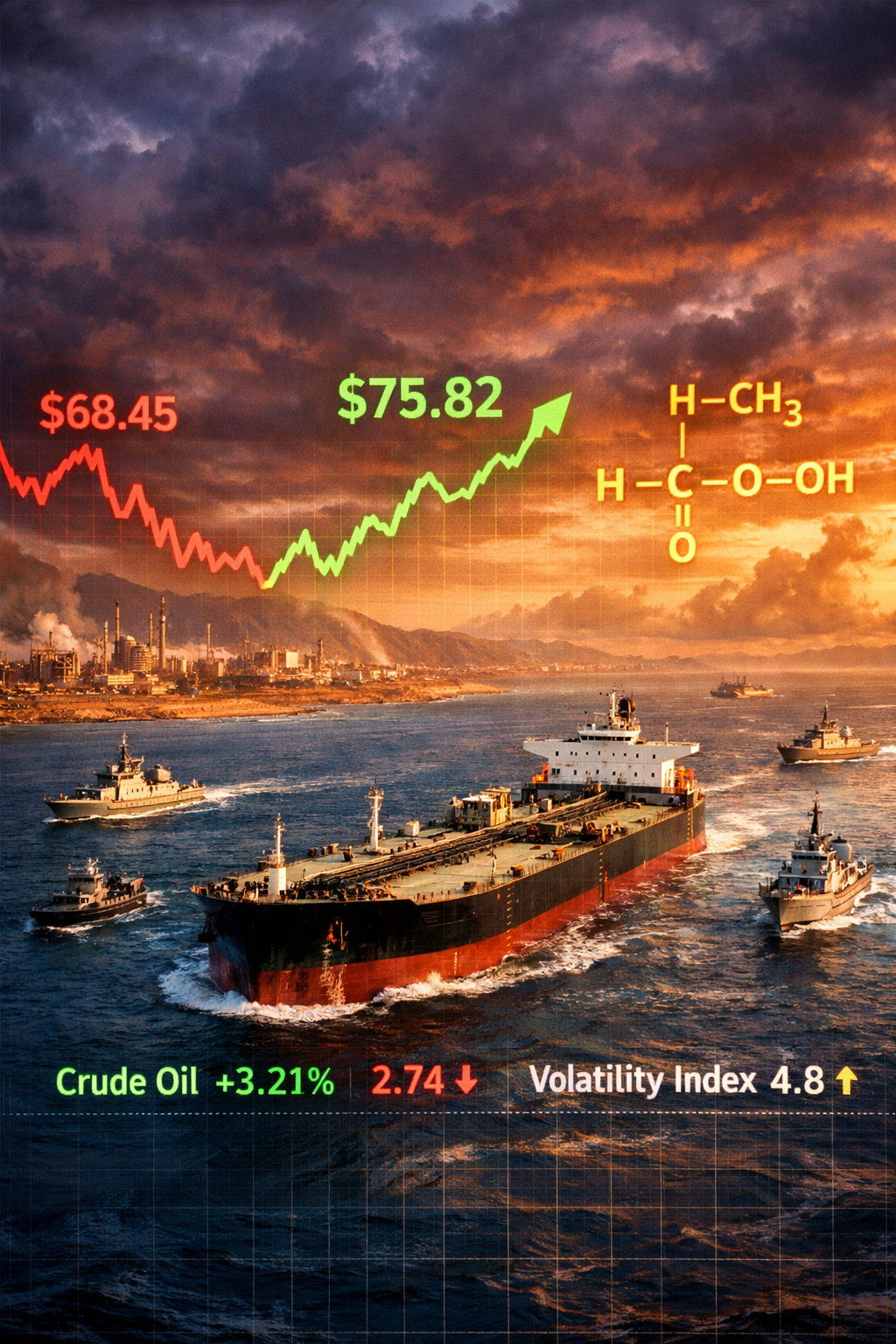
The U.S.-Iran conflict is no longer a risk scenario. It is a reality — and its effects are already moving through energy markets, shipping corridors, and global chemicals supply chains. For decision-makers across energy, chemicals, logistics, and finance, the question is no longer whether this conflict will affect their operations. It is how severely, and how fast it escalates from here.
BCC Research has published a new specialty market intelligence brief analyzing the multi-dimensional impacts of the ongoing U.S.-Iran conflict across global energy and chemicals markets. The analysis spans crude oil, natural gas, LNG, petrochemicals, and specialty chemicals, delivering the scenario-based intelligence that strategic planning teams need to act on right now.
Why This Matters: The Strait of Hormuz Factor
At the center of this conflict sits one of the world’s most critical infrastructure chokepoints: the Strait of Hormuz. The numbers frame the exposure clearly.
|
~21%
of global petroleum liquids transit the Strait of Hormuz daily
|
14
chapters of in-depth analysis across energy and chemicals sectors
|
4
escalation trajectories modeled with quantified market impacts
|
Disruption to this waterway — through direct military action, mine deployment, or commercial shipping insurance restrictions — is now an active operational consideration, not a tail risk. The market impacts are already registering across energy pricing, petrochemical feedstock availability, and downstream chemicals supply chains.
|
“Even the early stages of this conflict have demonstrated that Hormuz-adjacent disruption risk commands significant crude oil price premiums. A sustained closure, even partial, represents an unprecedented supply shock to modern energy markets — one that cascades well beyond crude into every downstream market that depends on Middle East feedstocks.”
— BCC Research, Impact of U.S.-Iran Conflict on Global Energy and Chemicals Markets (April 2026)
|
Beyond Oil Prices: The Chemicals Supply Chain Is Already Feeling It
Most commentary on this conflict focuses narrowly on crude oil prices. That misses the larger operational risk. BCC Research’s analysis traces the conflict’s impact through the full value chain into petrochemicals and specialty chemicals — sectors where concentrated production and limited feedstock flexibility are creating real, near-term vulnerabilities.
Supply-demand imbalances are cascading through polymers, plastics, and resins markets. Electronic chemicals and semiconductor materials face supply pressure from Middle East-dependent precursors. Pharmaceutical fine chemicals supply chains are dealing with growing bottlenecks. These downstream impacts compound over time, creating challenges for manufacturers and end-users that persist well beyond any initial energy price shock.
Four Escalation Trajectories, Quantified
Rather than presenting a single forecast, the report models four distinct trajectories from the current conflict — each defined by different assumptions about escalation, duration, and international response:
|
S1
Limited conflict with contained escalation
|
S2
Prolonged regional conflict with broader disruption
|
|
S3
Strait of Hormuz closure — worst-case supply shock
|
S4
De-escalation and market normalization
|
For each trajectory, the report quantifies expected supply disruptions, models price sensitivity across crude, LNG, and chemical commodities, and assesses the probability-weighted impact on regional markets. This framework lets organizations stress-test their exposure against clearly defined conditions rather than relying on generalized assessments while the situation is still in flux.
What the Report Covers
The full report spans 14 chapters, from conflict context and strategic analysis of the Strait through to policy response frameworks and corporate strategic recommendations:
|
Ch 2
Conflict overview & strategic importance of the Strait of Hormuz
|
Ch 3
Global energy market exposure & dependency analysis
|
|
Ch 4
Crude oil price sensitivity & SPR deployment strategies
|
Ch 5
Natural gas & LNG supply risk quantification
|
|
Ch 6
Shipping route disruptions, freight, & insurance impacts
|
Ch 7
Petrochemicals supply-demand & price disruption analysis
|
|
Ch 8
Specialty chemicals, semiconductors, & pharma fine chemicals
|
Ch 9
Chemical supply chain & logistics disruptions
|
|
Ch 10
Regional impact: Middle East, Asia-Pacific, Europe, North America
|
Ch 11
Four-scenario comparative impact analysis
|
|
Ch 12
Market beneficiaries & most affected segments
|
Ch 13
Policy responses & corporate strategic frameworks
|
|
Ch 14
Conclusion and Future Outlook
|
|
Who This Intelligence Is For
Energy companies — oil & gas producers, refiners, LNG operators
Chemical manufacturers — petrochemical and specialty chemical producers
Trading houses — energy and commodity traders assessing volatility
Logistics providers — shipping companies, freight, tanker operators
Financial institutions — investment banks, hedge funds, insurers
Consulting firms — strategy advisors to energy and chemicals clients
Government agencies — energy security and trade policy departments
Corporate strategy teams — risk management and planning functions
The Market Is Already Moving. Is Your Organization Ready?
The organizations navigating this conflict most effectively are those that have already assessed their exposure, stress-tested their supply chains, and developed contingency frameworks — not those waiting for the next quarterly review. The situation is live. The analysis is available now. Download the free executive summary and start with the findings that are most directly relevant to your markets.
|
Download the Free Executive Summary
Get key findings from BCC Research’s comprehensive analysis of the ongoing U.S.-Iran conflict’s impact on global energy and chemicals markets — including scenario highlights and strategic takeaways. Free, no commitment required.
|
|
DOWNLOAD EXECUTIVE SUMMARY — FREE
|
|
|
Free PDF | Instant download | No commitment required
|