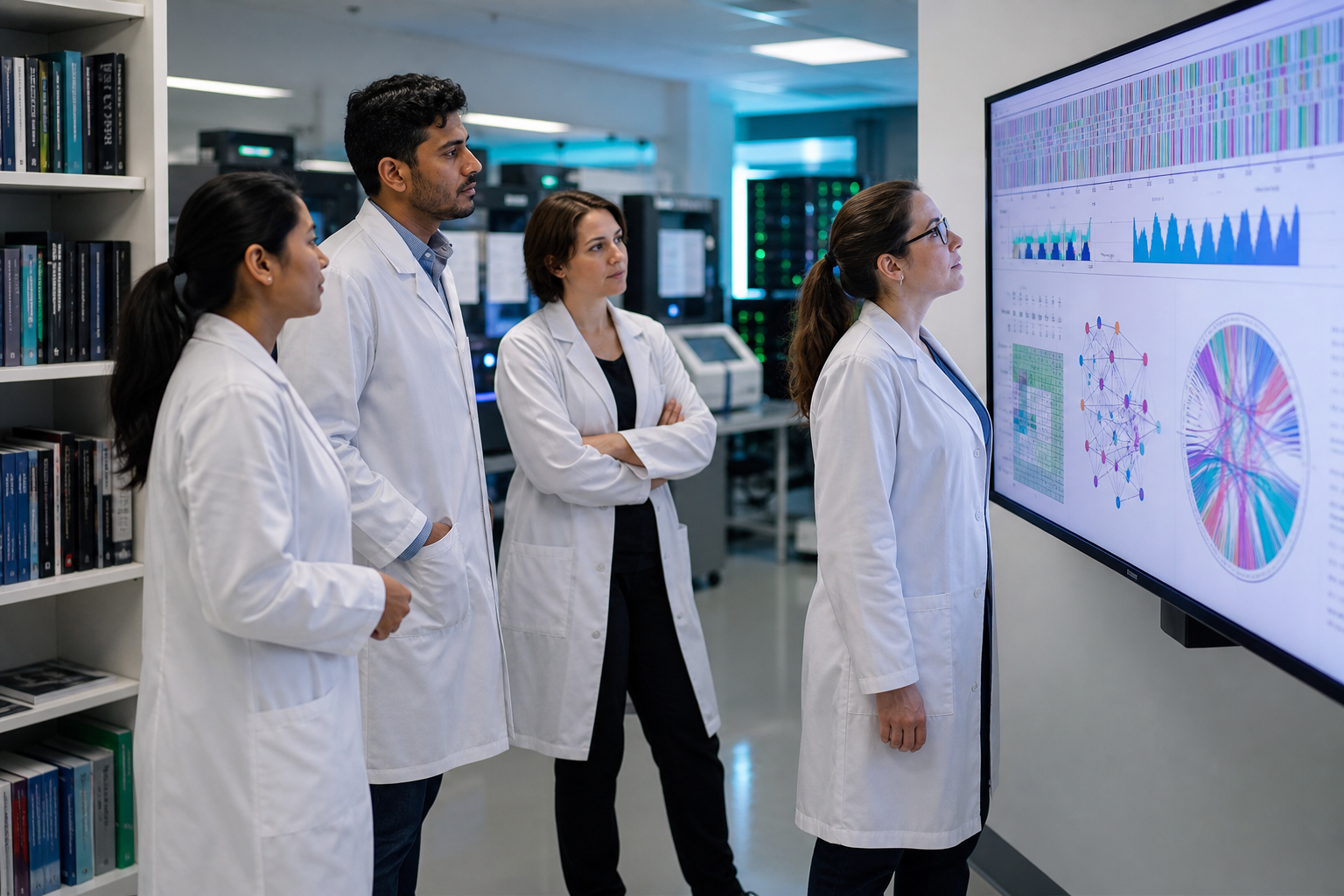
Biology generates data at a scale that would have been unimaginable a decade ago. A single next-generation sequencing run can produce gigabytes of raw genomic information, and multi-omics studies layer on proteomics, transcriptomics, and metabolomics data on top of that. The tools needed to make sense of all this — bioinformatics platforms, pipelines, and services — are fast becoming as important as the experiments themselves.
The global bioinformatics market was valued at $20.9 billion in 2024 and is projected to reach $43.5 billion by 2030, growing at a CAGR of 13.1% from 2025 to 2030. That trajectory reflects something real: the convergence of AI and machine learning with biological research is fundamentally changing how drug discovery, cancer treatment, and personalized medicine get done. Researchers aren't just sequencing genomes anymore — they're training models to predict how drug candidates behave before a single compound enters a lab.
North America leads with 47.7% of global market share, but the story elsewhere is worth watching. China's uptake of NGS technologies and cloud-based pay-as-you-go services is accelerating adoption in ways that are reshaping competitive dynamics. Public-private collaborations — like the BD Biosciences and CSIR-IGIB single-cell multiomics Centre of Excellence in India — signal that emerging economies are moving faster than many expect. Government programs like Horizon Europe and France 2030 are also pouring funding into bioinformatics infrastructure. Key players shaping this space include Illumina, Thermo Fisher Scientific, Siemens Healthineers, Dassault Systèmes, and PacBio, among others.
None of this comes without friction. Advanced software licensing can cost tens of thousands of dollars annually, and hiring skilled bioinformaticians — with U.S. and European salaries running $90,000 to over $110,000 — remains a real constraint for smaller institutions.
Want the full picture? Download the free overview of our report Bioinformatics: Technologies and Global Markets for a detailed look at market sizing, regional breakdowns, emerging technologies, and competitive landscape analysis.