Artificial Intelligence (AI) is rapidly transforming the landscape of food retail and e-commerce, reshaping how brands operate, optimize supply chains, engage customers, and deliver products. As consumer expectations rise and digital transformation accelerates worldwide, the global market for AI-driven food retail solutions is expanding at an unprecedented pace.
In this blog, we explore the key drivers behind this growth, the technologies leading the transformation, and what the future holds for AI in the food retail and e-commerce ecosystem.
Why AI Is Revolutionizing Food Retail and E-Commerce
Food retail and online grocery shopping have undergone massive changes over the past decade. The shift toward digital platforms, faster delivery expectations, and personalized shopping experiences have placed immense pressure on businesses to innovate. AI addresses these challenges by enabling:
1. Enhanced Customer Personalization
AI algorithms analyze customer behavior, purchase history, and preferences to deliver tailored product recommendations. Personalized search results, dynamic pricing, and customized promotions increase cart value and boost customer satisfaction.
2. Smarter Inventory and Supply Chain Management
Food retailers deal with perishable goods and volatile demand. AI-powered forecasting helps predict stock levels, reduce waste, and optimize replenishment cycles. This leads to improved operational efficiency and minimal loss due to spoilage.
3. Automated Customer Service
AI chatbots and virtual assistants provide real-time support, helping customers with order tracking, product queries, and returns. This improves engagement while reducing workload for human support teams.
4. Improved Quality Control
Computer vision systems are increasingly used for detecting product defects, monitoring freshness, and automating inspection processes in warehouses and stores.
Key AI Technologies Driving Market Growth
Several cutting-edge AI technologies are fueling advancements in food retail and e-commerce:
Machine Learning (ML) & Predictive Analytics
Used for demand forecasting, pricing optimization, targeted marketing, and supply chain planning.
Computer Vision
Enables automated checkout, inventory scanning, product quality assessment, and cashierless store experiences.
Natural Language Processing (NLP)
Improves search accuracy, chatbot interactions, and voice-based ordering systems.
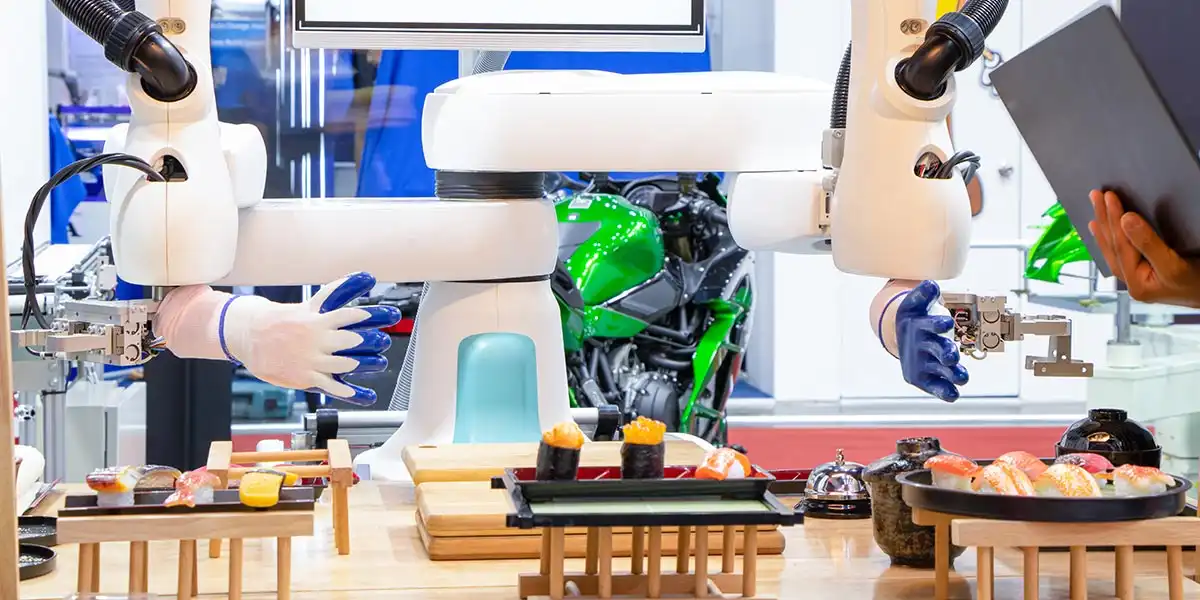
Robotics & Automation
Warehouse robots, autonomous delivery vehicles, and automated picking systems enhance speed and reduce labor costs.
Generative AI
Emerging as a tool for product catalog creation, personalized marketing content, recipe recommendations, and dynamic website content generation.
Market Drivers Behind the Rapid Growth of AI in Food Retail
1. Surge in Online Grocery Shopping
The global rise in e-commerce, accelerated by changing consumer habits and investment in online delivery infrastructure, has created a growing need for fast, accurate, AI-driven operations.
2. Increasing Competition
Retail giants and startups alike are leveraging AI to differentiate themselves through better customer experiences, faster service, and competitive pricing.
3. High Demand for Operational Efficiency
AI helps reduce labor costs, minimize errors, and improve accuracy in forecasting—crucial benefits in the low-margin food retail sector.
4. Focus on Sustainability
AI solutions that reduce food waste, optimize delivery routes, and improve energy efficiency align with growing sustainability goals across the supply chain.