
Nov 10, 2026
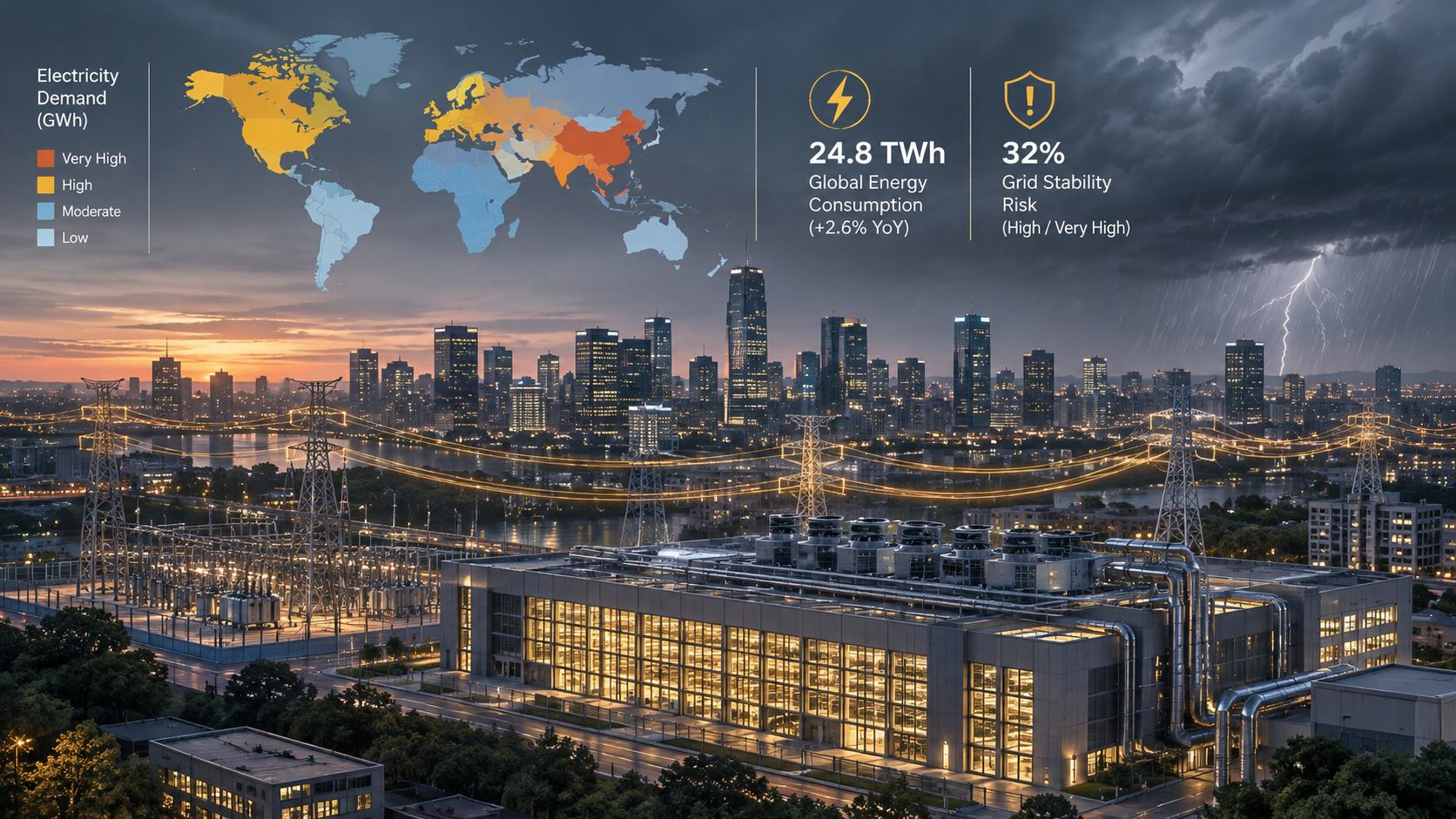
On October 17, 2026, Sri Lanka's national grid failed and all 22 million people lost power. Earlier in the year, grid collapses hit Nigeria and Cuba, and a winter storm cut power to more than 2 million Americans. In January, North America's grid watchdog (NERC) warned that 13 of its 23 regions face elevated or high risk of supply shortfalls within five years.
None of this means a global blackout is coming. It does mean grids everywhere are under more strain than at any time in decades. Demand is climbing fast, grid investment and permitting are years behind it, and extreme weather, cyberattacks and conflict are testing systems at the same time.
The International Energy Agency (IEA) expects global electricity use to grow about 3.6% a year through 2030, roughly 50% faster than the previous decade.
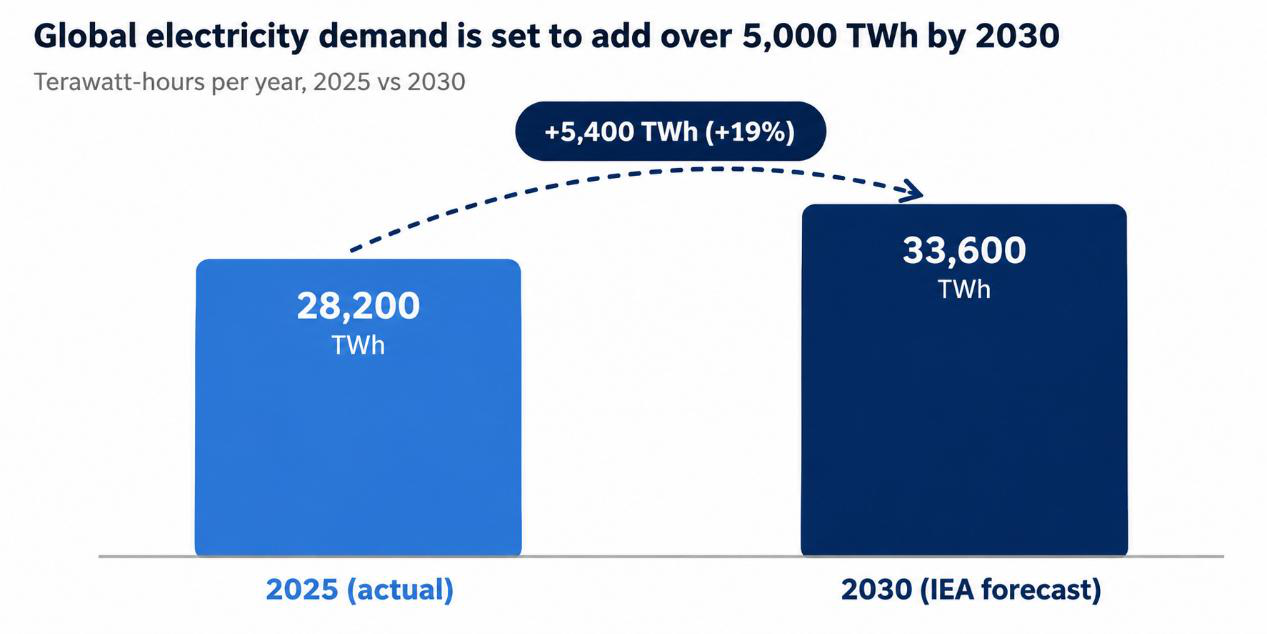
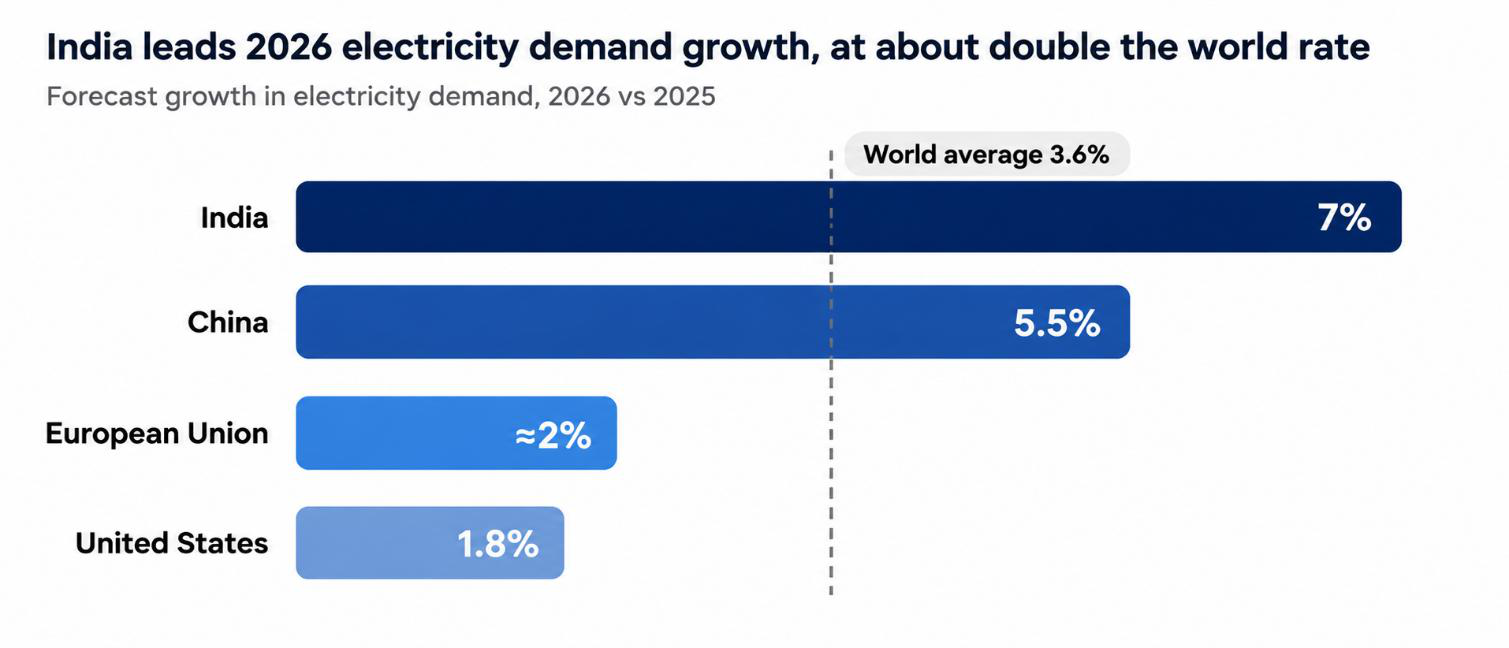
Emerging economies account for nearly 80% of the added demand, with India growing at about double the world rate in 2026. Advanced economies are growing again too, led by data centers.
Industry and everyday electrification still supply most of the growth. In China, making solar panels, batteries and EVs is itself electricity intensive.
Cooling is surging with rising incomes and more frequent heatwaves. The IEA expects air conditioning to account for over 20% of India's demand growth to 2030, and heat now sets peak demand in many systems.
Data centers are the fastest-growing new load in advanced economies. Data center demand rose 17% in 2025, and the IEA attributes around half of US demand growth to them. EVs and heat pumps add to it: electricity use by EVs grew 38% in 2025.
The hard part for grids is where and when the new load lands. Data centers show up as large loads in specific places, and cooling piles demand onto the hottest hours, when equipment is most stressed.
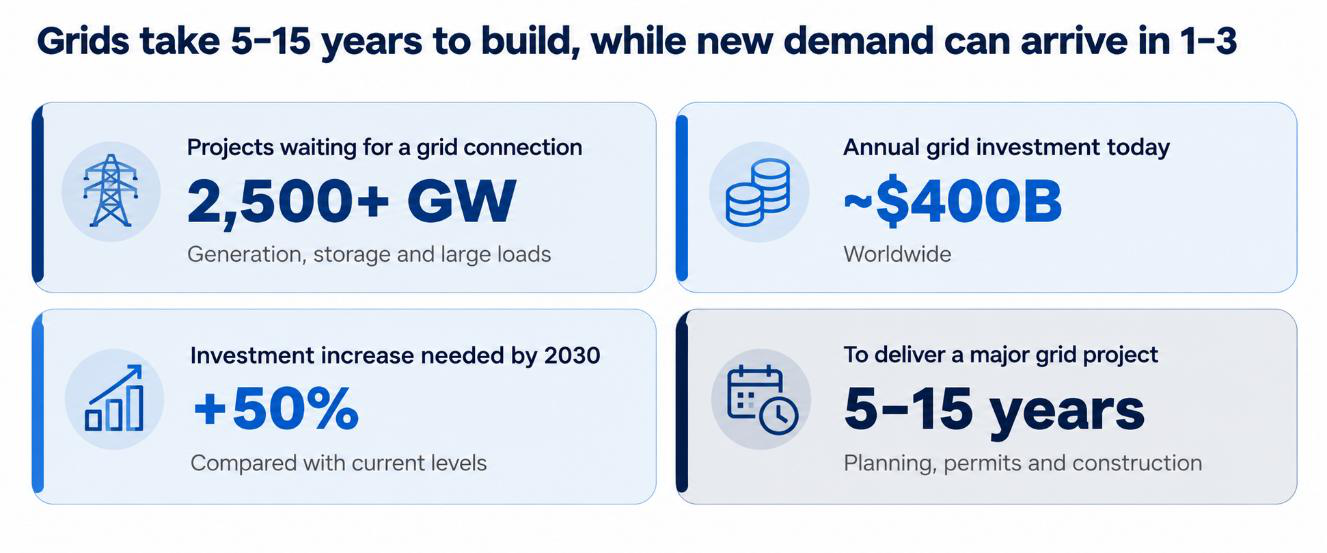
More than 2,500 GW of power plants, storage and large loads are waiting to connect worldwide. A data center can be built in one to three years. A major transmission line can take five to fifteen.
Solar and wind are set to rise from about 17% to 27% of global generation by 2030. Grids built for coal, gas and hydro now need new tools for voltage control, system stability and the evening peak when solar fades. Countries that invest in storage, interconnection and advanced controls run high-renewable systems reliably.
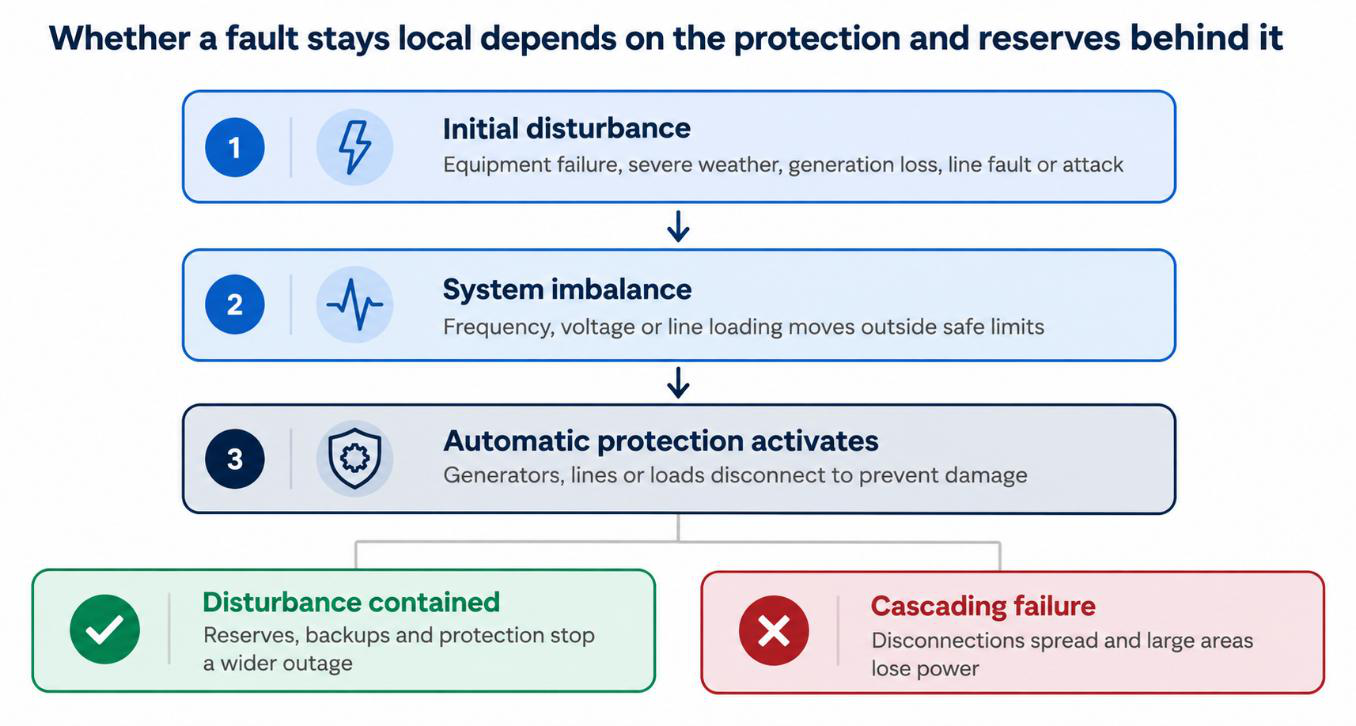
A major blackout needs a trigger and not enough protection or reserve to contain it. Triggers include extreme heat, storms, aging equipment, fuel shortages, cyberattacks and operator error, and they often arrive together. A heatwave raises demand while it cuts the output of power plants and the capacity of power lines.
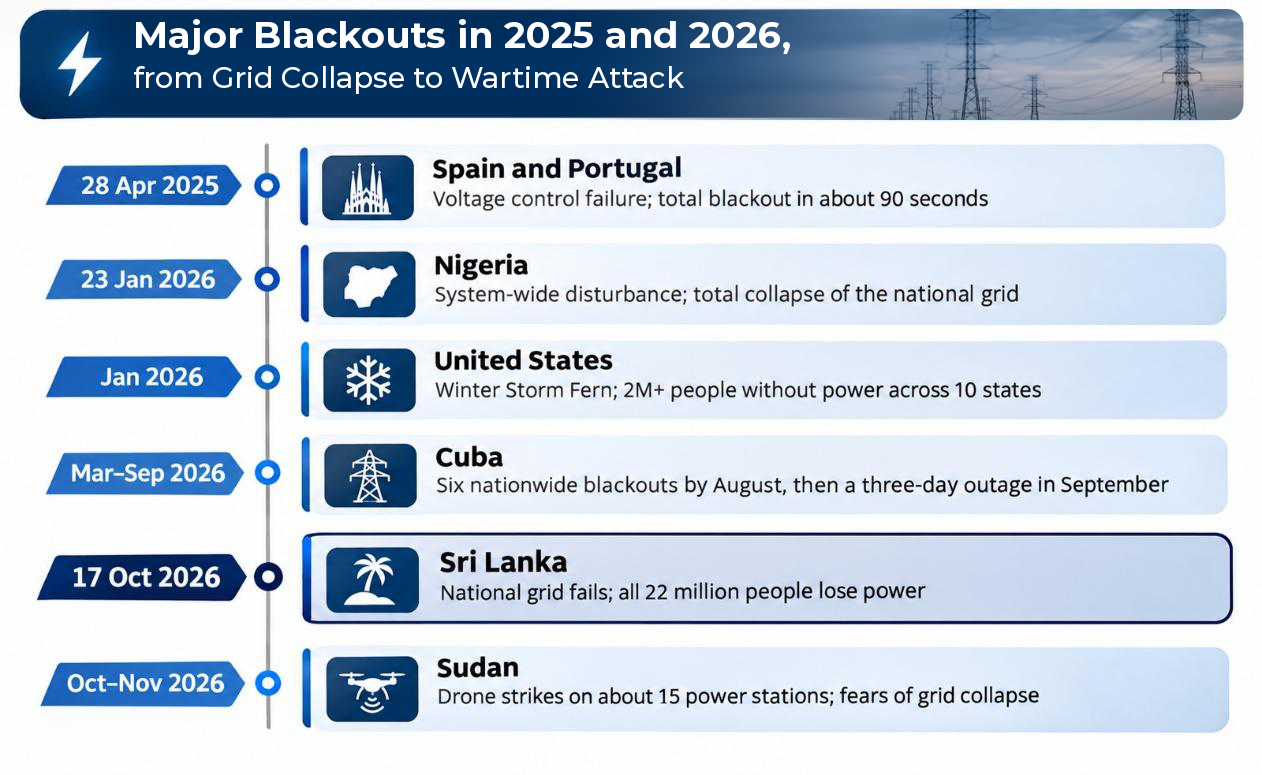
Sri Lanka is the latest warning. One power plant's output dropped sharply in under half a second, pulling grid frequency below safe limits. Afterward, the government ordered rooftop solar owners to disconnect. Whether solar contributed is still unclear, and the episode shows how quickly fast-growing distributed solar can become a stability question for smaller grids.
Spain and Portugal is the most closely studied case. In March 2026, Europe's grid operators (ENTSO-E) concluded it was Europe's worst blackout in over 20 years and the first caused by overvoltage, with no single root cause. Their main recommendation was automated voltage management that reacts faster than human operators.
Each grid failed a different way. Nigeria's collapse began with a system disturbance, the US outages came from severe weather, Cuba's from aging plants and fuel shortages, and Sudan's from attacks on power stations during conflict.
There's no single global ranking of blackout risk. These are the main pressure points:
| Region | Main impact |
| North America | Data center demand outpacing new supply |
| Europe | Thin interconnection in specific areas |
| Fast-growing Asia | Heat-driven peaks and evening ramps |
| Ukraine | Military attacks on energy infrastructure |
| Cuba | Aging plants and fuel shortages |
These are warnings. Some analysts argue NERC overstates North American risk by assuming too much data center load will connect, and the EU and ENTSO-E found no systemic summer risk across most of Europe.
Very unlikely. There is no single global grid. Power systems are regional networks, many linked only by direct-current connections. A cascade can cross connected countries, as it did in Iberia, and it can't jump between separate continents. Only an extraordinary shared hazard, such as a severe solar storm, could hit many grids at once, and even then the impact would vary widely.
The realistic risk is more frequent, more costly regional failures in a world that depends on electricity more every year.
NERC sees several North American regions moving from elevated to high risk later this decade, while India, China and Southeast Asia add demand at record pace. Investment decisions made in the next two to three years will shape reliability for the next decade.
Grid-scale storage, transmission and HVDC expansion, grid-forming technology, demand flexibility from data centers and faster permitting are all in play. The open question is which will scale fastest, and where.



We are your trusted research partner, providing actionable insights and custom consulting across life sciences, advanced materials, and technology. Allow BCC Research to nurture your smartest business decisions today, tomorrow, and beyond.
Contact Us