
Humanoid Robots: Where Artificial Intelligence Meets Human-Like Automation

Humanoid Robots: Where Artificial Intelligence Meets Human-Like Automation

date

Jan 12, 2026

Blog information technology Humanoid Robots: Where Artificial Intelligence Meets Human-Like Automation

The idea of robots that resemble and behave like humans has long captivated our imagination. Today, that vision is becoming reality. Humanoid robot machines, designed to mimic human form and behavior, are moving beyond science fiction into practical use across various industries. With advancements in artificial intelligence (AI), sensors, and mechatronics, humanoid robots are evolving from experimental prototypes into valuable tools that can work, assist, and even learn alongside people.

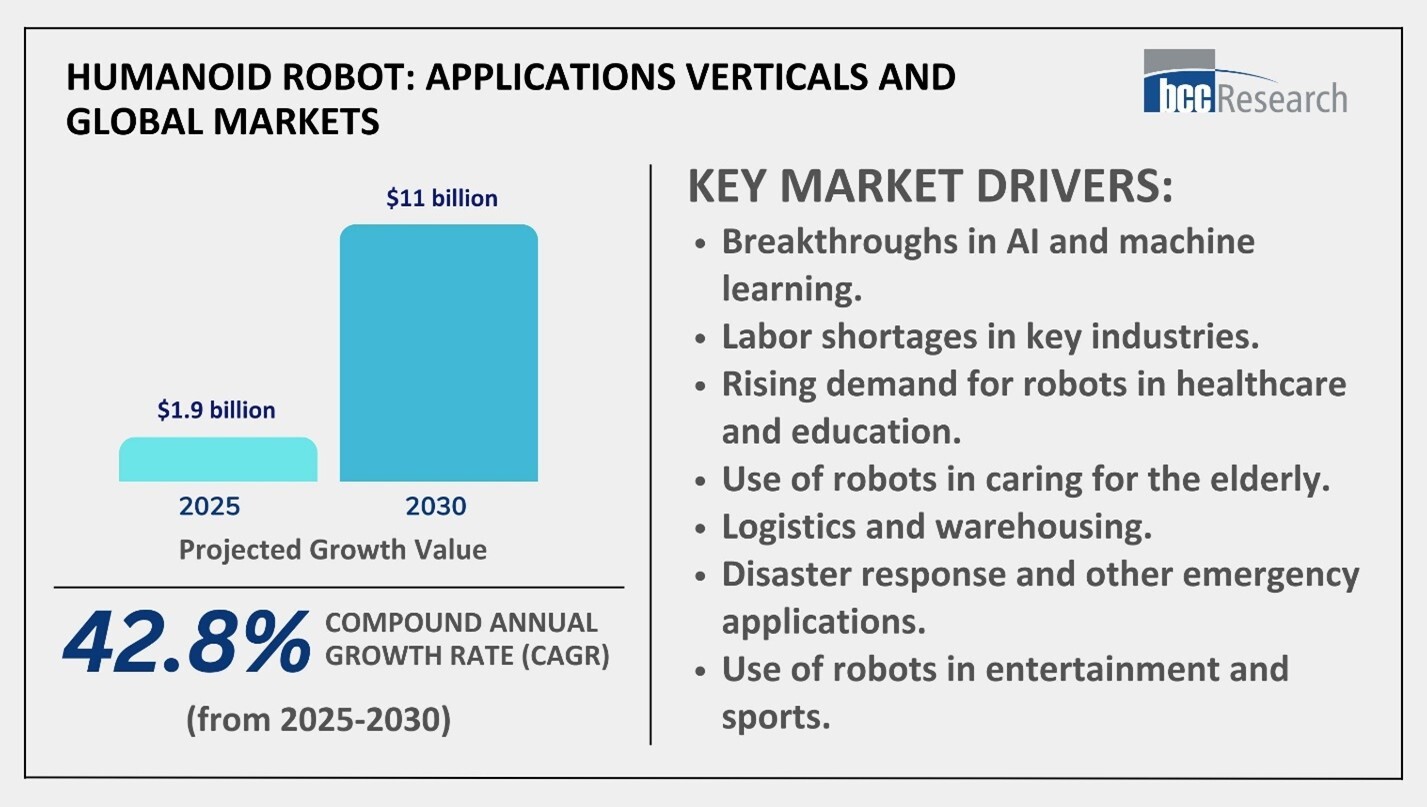
According to BCC Research, the global market for humanoid robots is expected to grow from $1.9 billion in 2025 to $11 billion by 2030, registering a compound annual growth rate (CAGR) of 42.8% during the forecast period. This remarkable expansion reflects the increasing integration of robotics into various sectors, including healthcare, manufacturing, education, and customer service.
Picture1-Dec-31-2025-12-40-38-5252-PM

Understanding Humanoid Robots

Humanoid robots are machines built to replicate human appearance, movement, and sometimes even emotions. They are equipped with AI-powered vision, speech recognition, and motion control systems, enabling them to interact naturally with their environment. Some humanoids are designed for physical tasks such as lifting, assembling, or inspecting, while others focus on social interaction, learning, and communication.

These robots are typically categorized into two types:

  • Bipedal robots, which walk on two legs like humans.
  • Wheeled humanoids, which use wheels for mobility but maintain a human-like upper body.

By combining AI with robotics engineering, these machines can understand voice commands, process visual input, and make decisions based on programmed logic or learned behavior.

Key Market Drivers

  1. Technological Advancements in AI and Robotics

The rapid development of AI, machine learning, and natural language processing is enabling humanoid robots to perform increasingly complex tasks. Enhanced sensors, lightweight materials, and improved battery efficiency are also making these robots more agile, responsive, and reliable.

  1. Rising Demand in Service and Healthcare Sectors

Humanoid robots are finding significant applications in healthcare, assisting with patient care, therapy, and hospital logistics. Robots that can communicate empathetically are helping reduce stress for elderly patients and individuals with disabilities. Similarly, in customer service roles, humanoids are being deployed as greeters, guides, and support agents in hotels, airports, and retail environments.

  1. Growing Adoption in Education and Research

Educational institutions are integrating humanoid robots into classrooms and labs to teach programming, robotics, and artificial intelligence concepts. Interactive humanoid tutors can engage students, assist in remote learning, and promote STEM education worldwide.

  1. Automation in Industrial and Manufacturing Environments

Industries are increasingly using humanoid robots for precision-driven tasks that require dexterity and adaptability, areas where traditional robots fall short. From quality inspection to handling delicate components, humanoid robots bring human-like flexibility to automated production lines.

  1. Investment and Public Interest

Global investment in robotics startups is at an all-time high. Governments and private companies are funding research in robotics and AI to address labor shortages, improve productivity, and explore new commercial opportunities. This strong backing is accelerating innovation and reducing costs, making humanoid robots more accessible than ever.


Humanoid Robot: Applications Verticals and Global Markets


The global market for humanoid robots is expected to grow from $1.9 billion in 2025 and is projected to reach $11 billion by the end of 2030, at a compound annual growth rate (CAGR) of 42.8% during the forecast period of 2025 to 2030.

Market Applications and Verticals

Humanoid robots are being deployed across multiple verticals, including:

  • Healthcare: Assisting in surgeries, rehabilitation therapy, and elderly care.
  • Education: Acting as teaching assistants, coding companions, and learning tools.
  • Hospitality and Retail: Providing customer service, guiding visitors, and enhancing brand experience.
  • Manufacturing: Performing repetitive or hazardous tasks that require precision.
  • Defense and Security: Conducting surveillance, bomb disposal, and rescue missions.
  • Entertainment: Appearing in theme parks, exhibitions, and live performances as interactive attractions.

These applications highlight the versatility of humanoid robots and their potential to work seamlessly with humans in both physical and social environments.

Regional Outlook

The adoption of humanoid robots is strongest in technologically advanced regions such as North America, Europe, and the Asia-Pacific.

  • Asia-Pacific leads the market, with countries like Japan, South Korea, and China investing heavily in robotics research and commercialization.
  • North America is rapidly expanding its use of humanoids in education, healthcare, and research.
  • Europe is focusing on ethical AI, design safety, and human-robot collaboration, particularly in service and industrial robotics.

Challenges and Opportunities

Despite its growth, the humanoid robot market faces challenges such as high production costs, limited battery life, and safety concerns related to human-robot interaction. However, these challenges are being addressed through ongoing research in advanced materials, energy efficiency, and regulatory frameworks for AI ethics and safety.

Meanwhile, the opportunities are immense. As technology matures, humanoid robots will not only enhance workplace productivity but also transform how humans interact with machines from partners in manufacturing to companions in daily life.

Conclusion

Humanoid robots are redefining the relationship between humans and technology. Once confined to research labs, they are now emerging as practical solutions for industries seeking efficiency, consistency, and innovation. The coming years will witness the emergence of even more intelligent, affordable, and human-like robots entering homes, hospitals, and workplaces.

Their evolution marks a new era, one in which machines don’t just automate tasks but also collaborate, communicate, and coexist with us. In the journey toward intelligent automation, humanoid robots stand as both a technological achievement and a symbol of the extent to which human creativity can be harnessed.

Learn More and Take Action:

Consider becoming a member of the BCC Research Library and gain access to our full catalog of market research reports in your industry. Not seeing what you are looking for? We offer custom solutions too, including our new product line: Custom Intelligence Services.

Contact us today to find out more.

    Stay ahead of industry trends, build your market research strategy and more.

    Sandeep Singh Negi

    Written By Sandeep Singh Negi

    Sandeep is a Senior Executive in Marketing Operations at BCC Research, proficiently serving as a graphic designer and content creative specialist. His expertise extends to AutoCAD and Revit, and he has made valuable contributions to the event industry with his design skills.

    Guiding smart decisions every step of the way

    Guiding smart decisions every step of the way

    We are your trusted research partner, providing actionable insights and custom consulting across life sciences, advanced materials, and technology. Allow BCC Research to nurture your smartest business decisions today, tomorrow, and beyond.

    Contact Us