Key Market Drivers
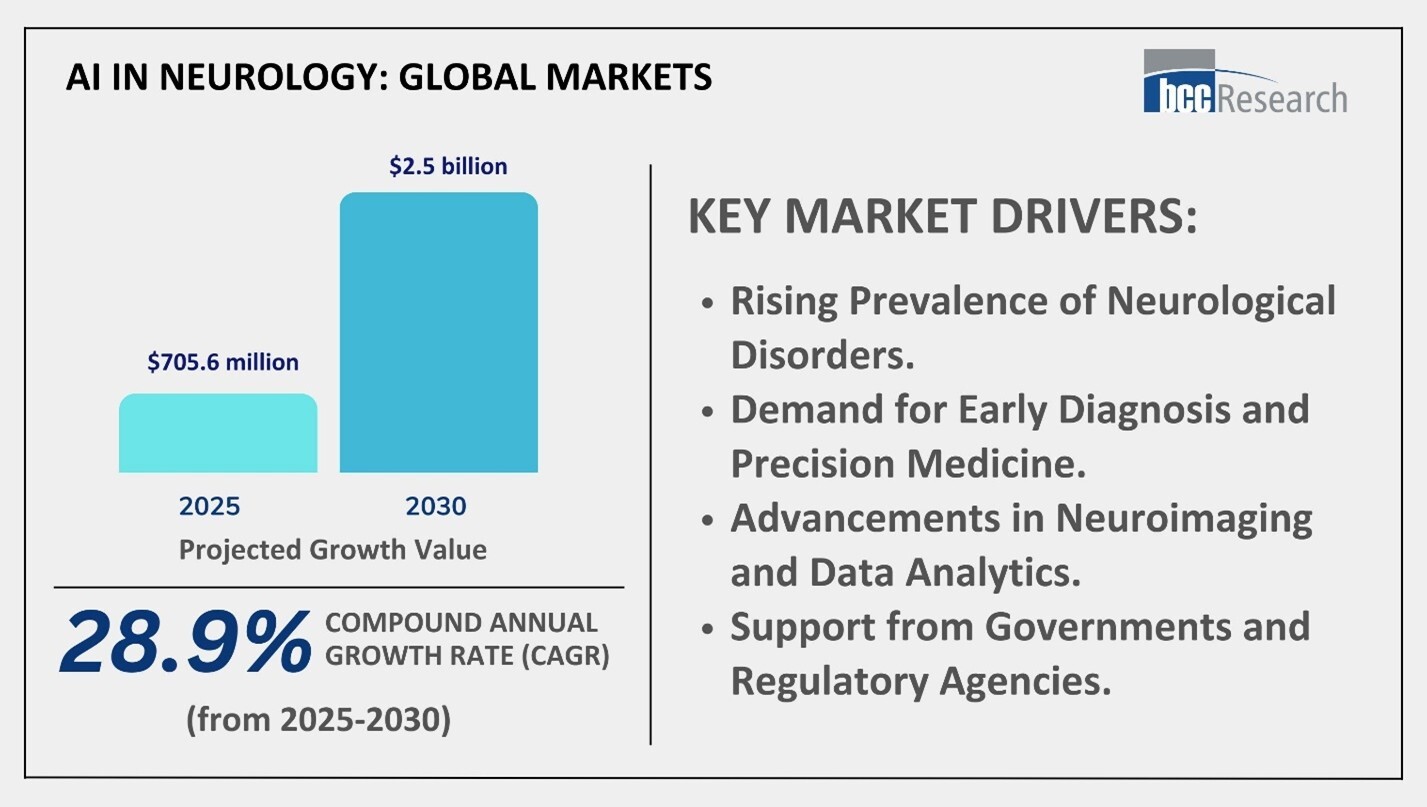
- Rising Burden of Neurological Disorders
The global increase in neurological diseases is one of the biggest drivers of AI adoption. With aging populations and lifestyle-related risk factors on the rise, conditions like Alzheimer’s and Parkinson’s are becoming more common. Healthcare systems are turning to AI-powered solutions to manage this growing burden through faster diagnosis and better disease monitoring.
- Advances in Neuroimaging and Data Analytics
Modern brain imaging techniques generate vast volumes of data that require advanced analysis. AI tools excel at processing these complex datasets, helping physicians pinpoint abnormalities quickly and accurately. Deep learning algorithms are improving image resolution, segmentation, and classification, enabling earlier detection of neurological conditions.
- Growing Investment in Digital Health
Governments, research institutions, and private companies are heavily investing in AI-driven healthcare solutions. Funding initiatives for medical AI startups, hospital digitization programs, and academic collaborations are boosting innovation in neurological applications.
- Personalized Medicine and Predictive Analytics
AI is paving the way for personalized neurology, where treatments are tailored to an individual’s genetic makeup and clinical history. Predictive analytics can assess a patient’s risk of developing specific disorders, allowing preventive care and early intervention.
- Integration of Wearable and Remote Monitoring Devices
AI-powered wearables and mobile applications are helping monitor neurological patients outside clinical settings. These devices can track movement patterns, sleep quality, or seizure activity in real time, offering physicians valuable insights into a patient’s daily condition and response to therapy.
Market Segmentation
The AI in neurology market can be divided based on application, end user, and region:
- By Application: Major applications include diagnosis and imaging analysis, predictive modeling, drug discovery, and patient monitoring. Imaging and diagnostics currently lead the segment, as AI significantly enhances the interpretation of radiology and pathology.
- By End User: Hospitals, diagnostic centers, research institutions, and technology companies form the core user base. Hospitals and clinics are adopting AI tools to streamline workflow and improve clinical accuracy.
- By Region: North America dominates the market due to advanced healthcare infrastructure and strong AI R&D. Europe follows closely, while the Asia-Pacific region is emerging as a fast-growing market driven by healthcare modernization and government initiatives.
Challenges to Overcome
While the potential of AI in neurology is immense, several challenges remain:
- Data privacy and security: Handling sensitive patient data requires strict compliance with ethical and legal standards.
- Integration with clinical workflows: Many healthcare systems still face difficulties incorporating AI tools into existing hospital infrastructure.
- Regulatory approvals: AI-based medical solutions must meet rigorous regulatory standards to ensure safety and reliability.
- Shortage of skilled professionals: The growing demand for experts who understand both AI technology and neurology highlights a need for specialized training.
The Road Ahead
The future of AI in neurology looks promising. With continuous improvements in machine learning models, cloud computing, and big data analytics, AI will become an indispensable part of neurological care. Ongoing research is exploring AI’s potential to predict disease onset years before symptoms appear, optimize treatment strategies, and enhance rehabilitation outcomes for patients recovering from neurological injuries.
Collaboration among technology companies, medical institutions, and regulators will be crucial to ensuring the responsible and effective adoption of AI. As these partnerships expand, AI will not replace neurologists but rather enhance their capabilities, allowing them to focus on the human side of care. At the same time, AI handles complex, data-driven analysis.
Conclusion
Artificial Intelligence is revolutionizing neurology by combining the power of data science with medical expertise. It enhances the accuracy of diagnosis, facilitates early intervention, and transforms patient care from a reactive to a proactive approach. The coming years will see AI play a central role in advancing brain health, accelerating research, and changing the treatment of neurological disorders worldwide.
With innovation accelerating and healthcare systems embracing digital transformation, AI in neurology stands as one of the most promising frontiers in modern medicine, holding the potential to change millions of lives for the better.
Learn More and Take Action:
Consider becoming a member of the BCC Research Library and gain access to our full catalog of market research reports in your industry. Not seeing what you are looking for? We offer custom solutions too, including our new product line: Custom Intelligence Services.
Contact us today to find out mor