
Jan 2, 2026
Blog biotechnology Botanical and Plant-derived Drugs, Where Natural Science Meets Regulated Medicine
Botanical and plant-derived drugs are increasingly shaping modern pharmaceutical markets as healthcare systems seek treatments that combine clinical effectiveness with improved safety profiles. Once limited to traditional medicine, these therapies are now developed through scientifically validated processes and regulated as prescription drugs, reflecting a growing convergence between natural compounds and modern drug development.
Plant-based medicines have long served as the foundation of healthcare across many cultures. Today, this knowledge is being refined through controlled cultivation, standardized extraction methods, and rigorous clinical evaluation. Unlike herbal supplements, botanical drugs are subject to regulatory oversight, ensuring consistency in composition, dosage, and therapeutic outcomes.
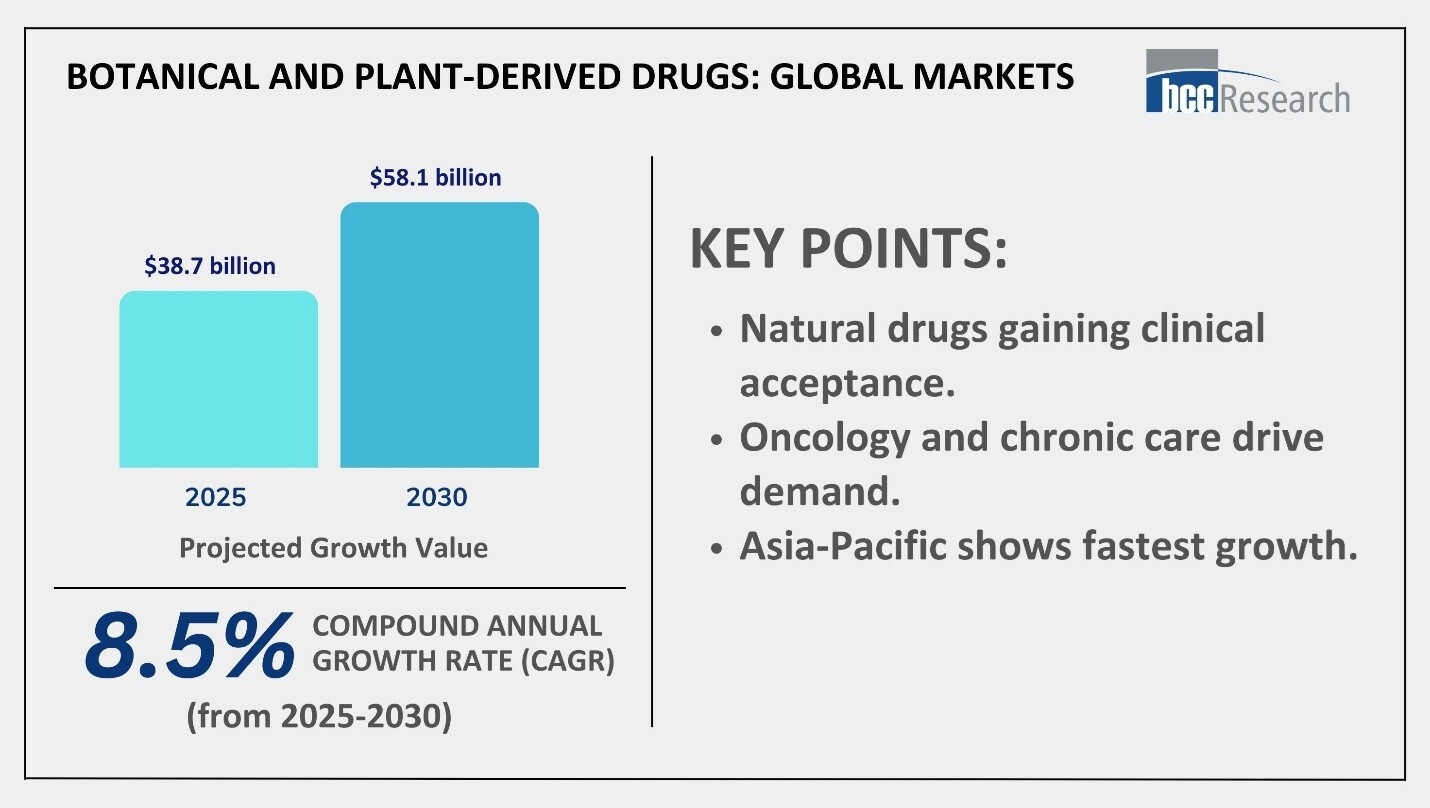
According to BCC Research, Botanical and Plant-derived Drugs: Global Markets is expected to grow from $38.7 billion in 2025 and is projected to reach $58.1 billion by the end of 2030, at a compound annual growth rate (CAGR) of 8.5% during the forecast period of 2025 to 2030.
Botanical drugs are composed of complex mixtures obtained directly from plant materials such as roots, leaves, seeds, or flowers. Plant-derived drugs may also involve the isolation and purification of specific active compounds from botanical sources. These products are formulated into oral, injectable, and topical dosage forms and are used across a wide range of therapeutic areas, including oncology, cardiovascular diseases, metabolic disorders, and infectious diseases.
The global market is being driven by rising demand for treatments that offer long-term disease management with fewer adverse effects. Increased scientific validation of plant-derived compounds has strengthened physician confidence and expanded clinical use. In parallel, pharmaceutical companies are investing in advanced technologies to improve bioavailability and therapeutic consistency, further supporting market growth.
Oncology represents a major segment of the market, as several established cancer therapies are derived from plant compounds. Cardiovascular and metabolic disorders also contribute significantly due to the chronic nature of these conditions. Anti-inflammatory, antiviral, and immune-modulating botanical drugs are gaining wider adoption in both hospital and outpatient settings.

The global market for botanical and plant-derived drugs is expected to grow from $38.7 billion in 2025 and is projected to reach $58.1 billion by the end of 2030, at a compound annual growth rate (CAGR) of 8.5% during the forecast period of 2025 to 2030.
North America and Europe currently dominate the global market, supported by strong regulatory systems, well-established research infrastructure, and high healthcare expenditure. Asia-Pacific is emerging as a key growth region, benefiting from rich plant biodiversity, traditional medicine expertise, and expanding pharmaceutical manufacturing capabilities. Governments in this region are increasingly formalizing plant-based therapies within national healthcare frameworks.
Regulatory agencies require botanical and plant-derived drugs to meet stringent standards for safety, efficacy, and quality. This includes traceable sourcing of plant materials, controlled manufacturing processes, and clinical validation. As sustainability becomes a priority, companies are also adopting responsible sourcing and cultivation practices to ensure long-term supply stability.
The market includes large pharmaceutical companies, specialized botanical drug developers, and research-focused biotechnology firms. Innovation efforts focus on discovering new plant-based molecules, enhancing drug delivery systems, and developing combination therapies. Strategic collaborations between academic institutions and industry players are accelerating research and commercialization.
Variability in raw plant materials, complex regulatory pathways, and sustainability concerns remain key challenges. Overcoming these issues requires investment in standardized cultivation, advanced analytical methods, and clear regulatory guidance to support consistent product quality and market expansion.
Botanical and plant-derived drugs are expected to gain a stronger foothold in global healthcare as scientific evidence and regulatory clarity continue to improve. Their role in treating chronic and complex diseases is likely to expand, positioning them as an integral component of modern pharmaceutical portfolios. The global market is set for steady growth, driven by innovation, clinical acceptance, and increasing demand for nature-based therapeutic solutions.
Consider becoming a member of the BCC Research library and gain access to our full catalog of market research reports in your industry. Not seeing what you are looking for? We offer custom solutions too, including our new product line: Custom Intelligence Services.
Contact us today to find out more.
Divya Dhamija is a Senior Executive of Marketing Operations at BCC Research, with a master’s degree in business. She specializes in optimizing marketing strategies and content creation and is dedicated to driving organizational growth through strategic marketing initiatives.
As one of the largest and fastest-growing life sciences markets in the world, Ch...
In business and forensics, the most challenging questions rarely come with strai...
Messenger RNA (mRNA) therapeutics have revolutionized healthcare, transitioning ...
We are your trusted research partner, providing actionable insights and custom consulting across life sciences, advanced materials, and technology. Allow BCC Research to nurture your smartest business decisions today, tomorrow, and beyond.
Contact UsBCC Research provides objective, unbiased measurement and assessment of market opportunities with detailed market research reports. Our experienced industry analysts assess growth opportunities, market sizing, technologies, applications, supply chains and companies with the singular goal of helping you make informed business decisions, free of noise and hype.